A couple of additions to the post about WWII sites.
First, in response to questions: Plywood landing craft (as opposed to something bulletproof) would have been much faster (meaning less time exposed to fire), cheaper, and able to use a smaller engine. And the craft would probably only be used once. I think the decision was basically borne out — there were no real problems on four of the five landing beaches, and on Omaha Beach almost all the casualties happened after the soldiers were out of the craft. The landing was deliberately at tide because the Germans set up a lot of obstacles at the tide line that the planners wanted the craft to avoid. There were about 18,000 paratroopers and glider troops on D-Day. I have an entry coming up on a remarkably successful British glider operation.
Also, in the paratrooper museum they had a section on life in occupied France, which included copies of French-language German propaganda magazines that attempted to persuade the French to accept their lot as an occupied people. The magazines were surprisingly glossy and, except for some gross Jewish caricatures, surprisingly subtle. One had an illustration of French farmer addressing a shower of British bombs being unleashed by a Churchill in the clouds, the farmer saying “Just leave us alone!” There was another article about the good fortune of a French family that had the father working in Germany; the illustration showed the happy father, the happy family and the money flowing between the two.
Our British tour guide many times pronounced Utah (as in Utah Beach) as “oo-tah” despite repeated reminders that it is “you-tah.” He had heard my favorite piece of US Army slang, used by combat troops about anyone who was not in the line of fire: REMF, for “rear echelon motherfuckers.”
Ok, turning the clock back to the 11th century. That’s when construction started on Mont-Saint-Michel, which never seemed real to me in pictures.
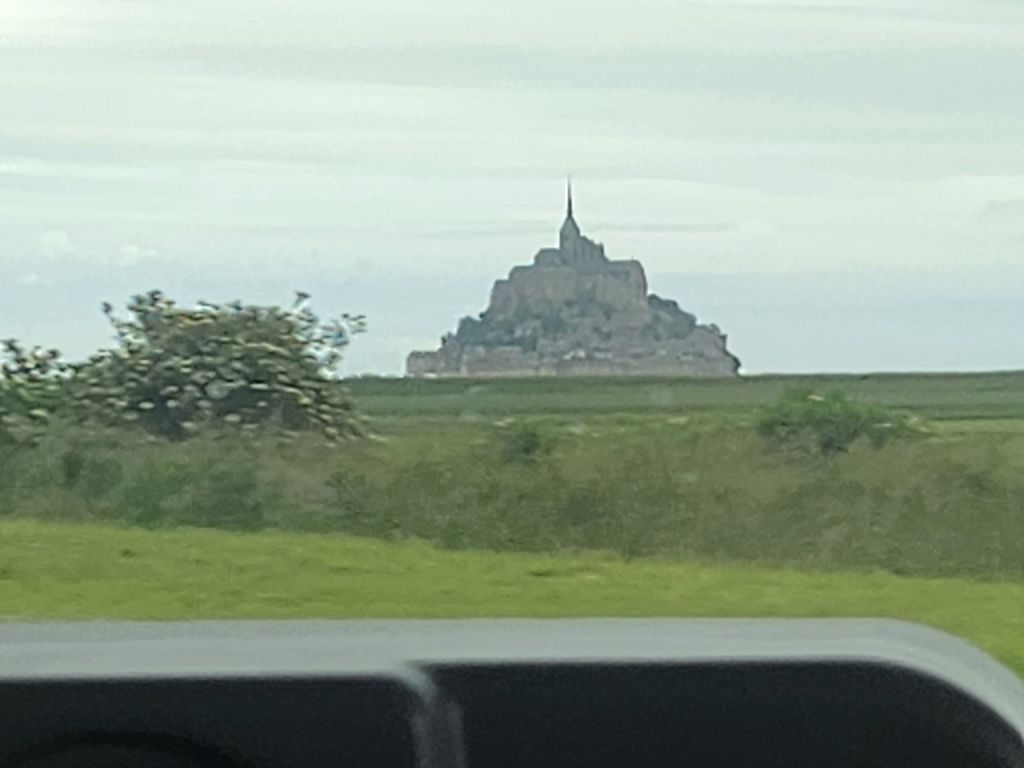
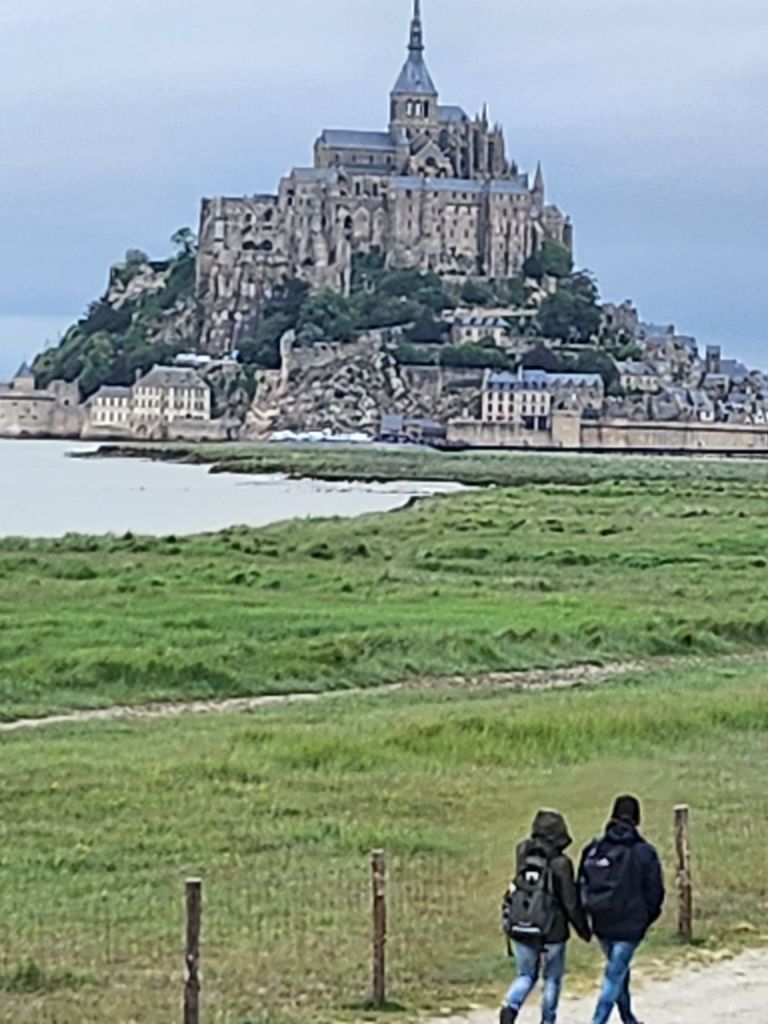
It also did not look quite real in the walk from the parking lot to the causeway across the mud- and tidal flats to the area. The causeway was built ten years ago; in the preceding decades there was a parking lot very near the base (now a green area) which our guide said really detracted from the magic.
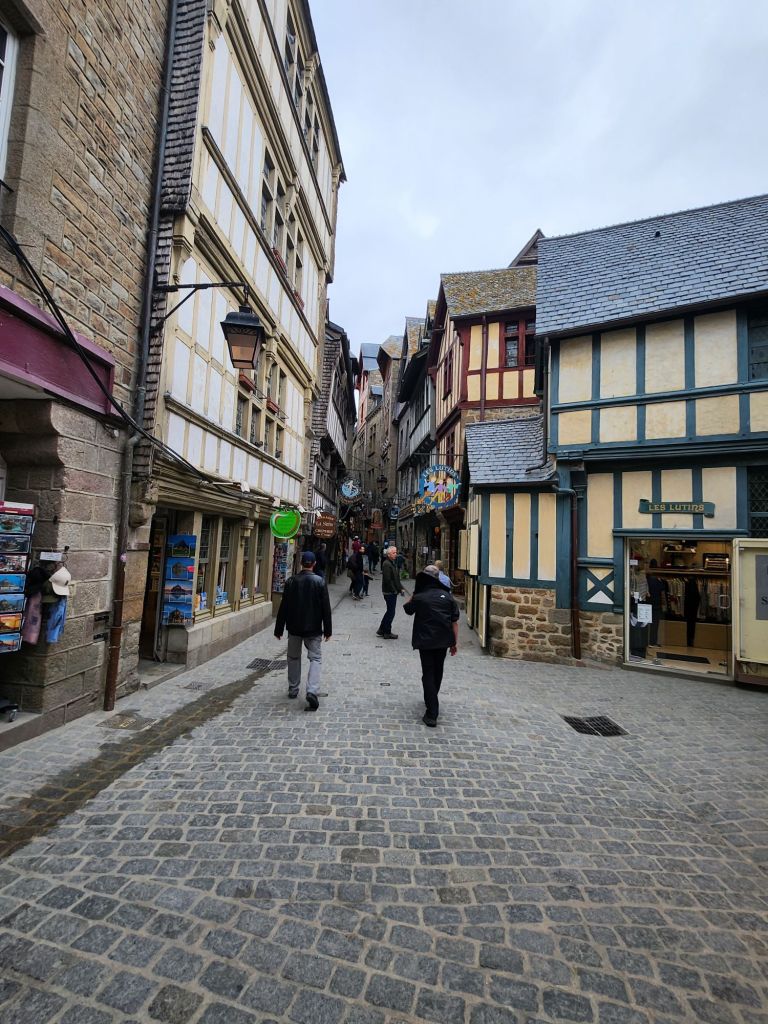
It does seem a little more real when you start up the steep narrow main street, which would have been charming if you took away the souvenir shops. There was no orientation or history or visitor center before you start climbing. All this made me appreciate the National Park Service.
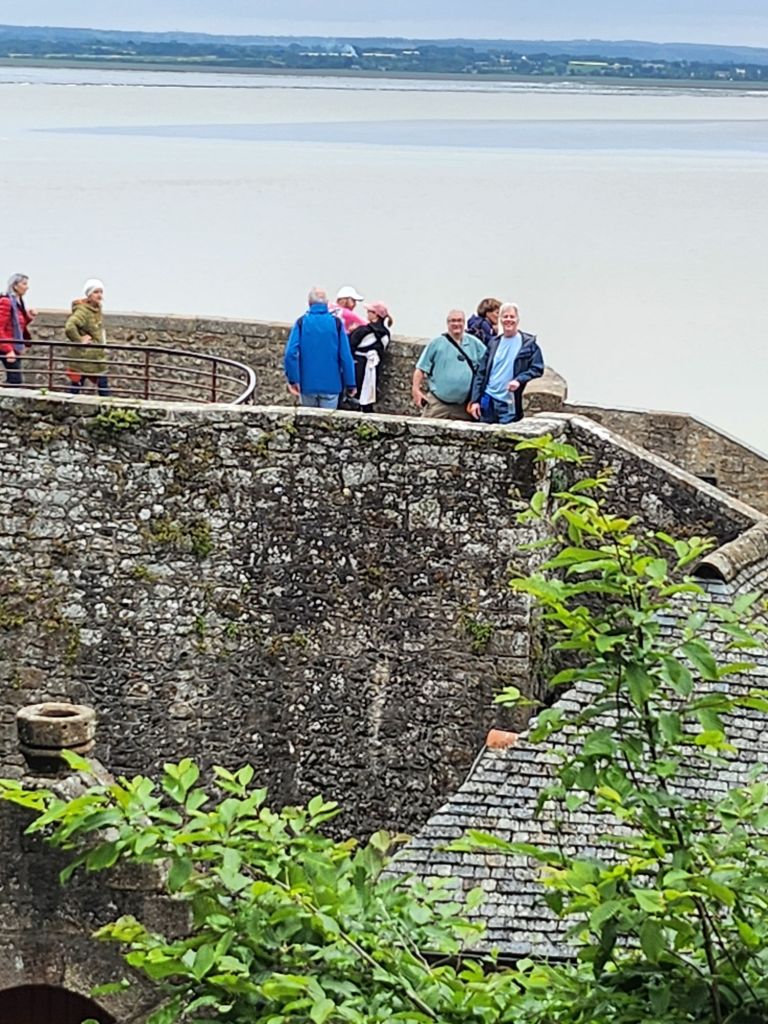
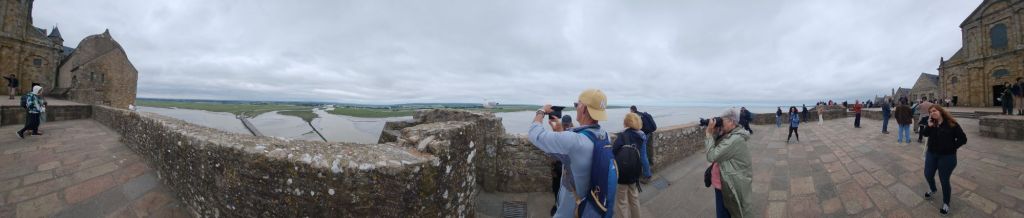
As you proceed, however, the crowds are thinned by the climb and by the admission fee to the monastery (though the area has not functioned as an active religious site for a few hundred years — well before the French Revolution). As yesterday, I will mainly let the photos do the communicating.




 helperblog
Leave a comment