Spent half the day at the Tower of London. It was a much larger complex than I’d imagined or remembered extremely vaguely from 1979. The visitor map and the placards did not provide any overview of the history of the place, but I gather from what I did read wandering around is that the first building, the White Tower, was constructed by William the Conqueror in the late 11th Century. In the following centuries kings and then generals built, rebuilt, remodeled, and demolished walls, gates (land and water), palaces, barracks, vaults, treasuries, prisons and battlements, because of perceived military necessity, desire to display power and grandeur (including keeping lions and other large wild animals for centuries), luxury, fire, decay and rot, royal whim, and royal paranoia and insecurity, without any unifying plan, theme, design or architecture. The result is a fascinating mess.
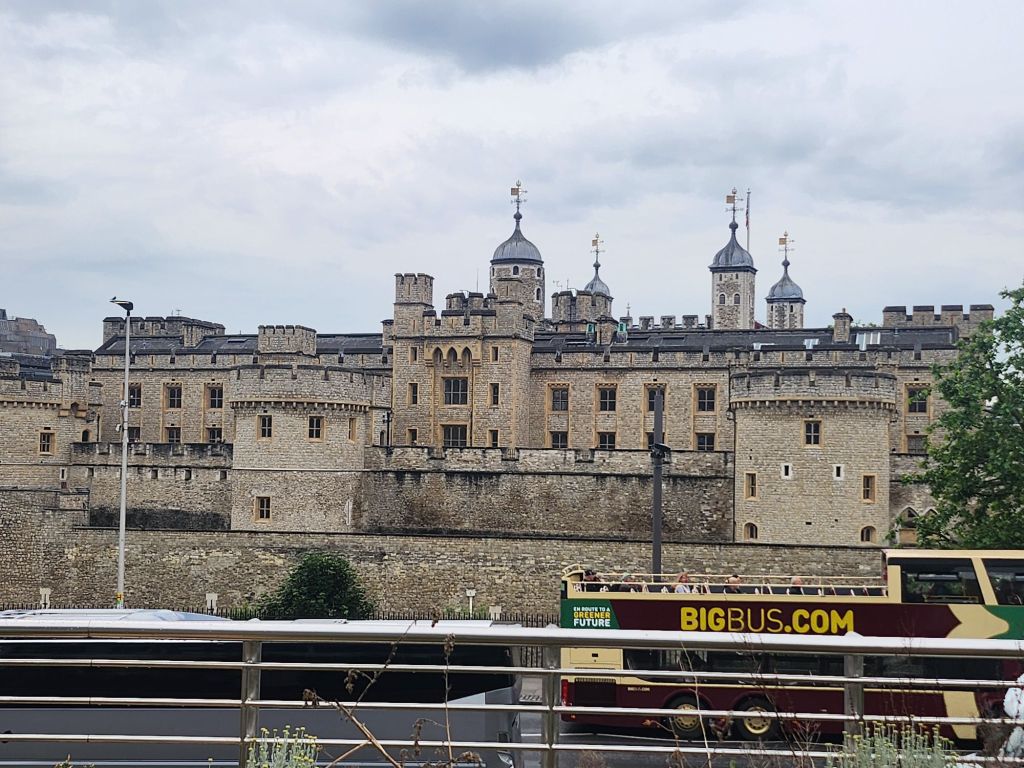
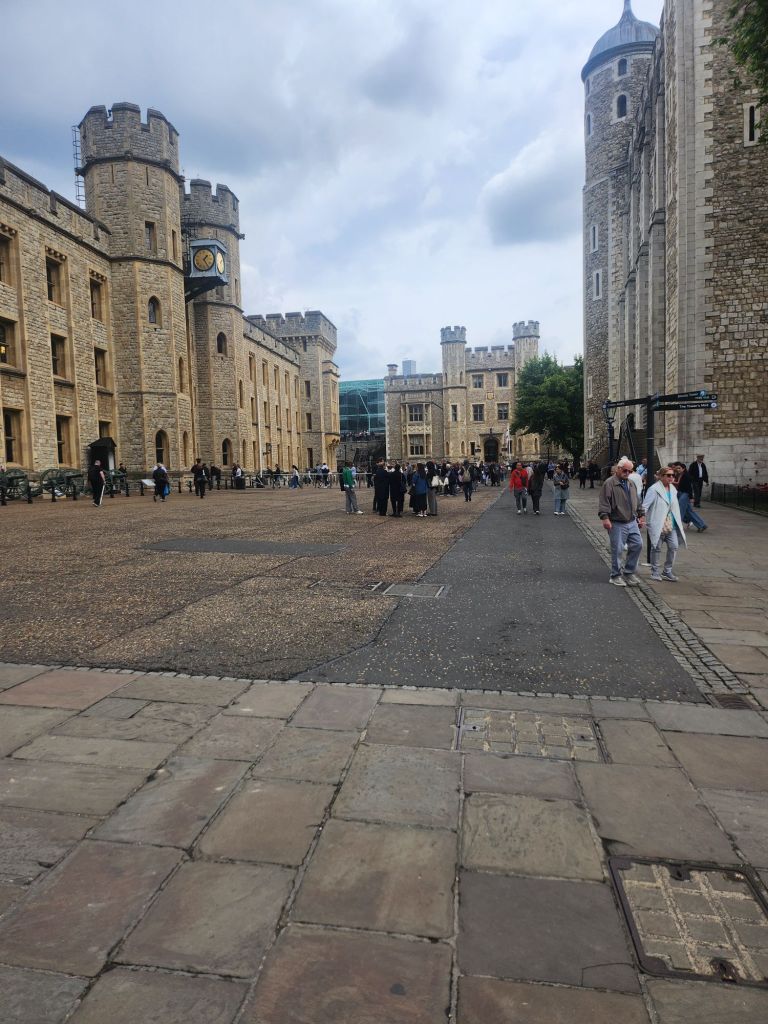
It never did get attacked except for a Peasants Revolt in the 14th century when the peasants ran in past the unresisting guards, killed a hated tax collector, teased and/or terrorized the royal family (Richard II was 14), and left. The heyday of the Tower as a prison was in the 16th century under the Tudors, when Queen Mary hounded and tortured Protestants, and then her successor and half sister Elizabeth did the same to Catholics. The latter carved some remarkably neat, sad and well preserved graffiti into the walls.
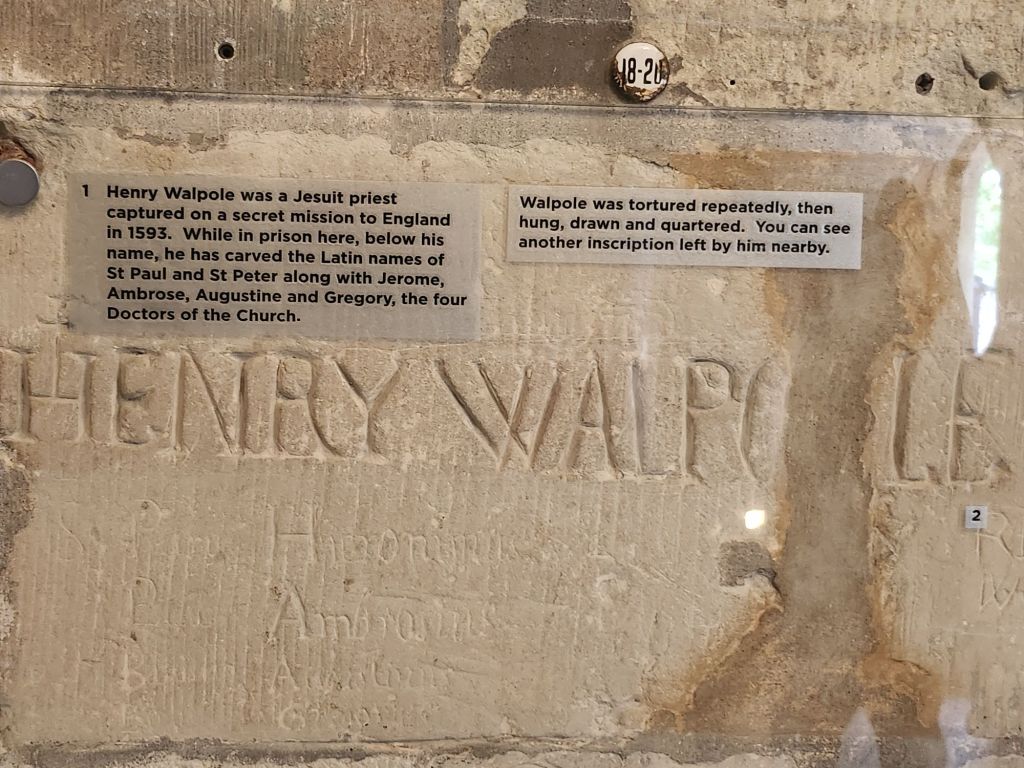
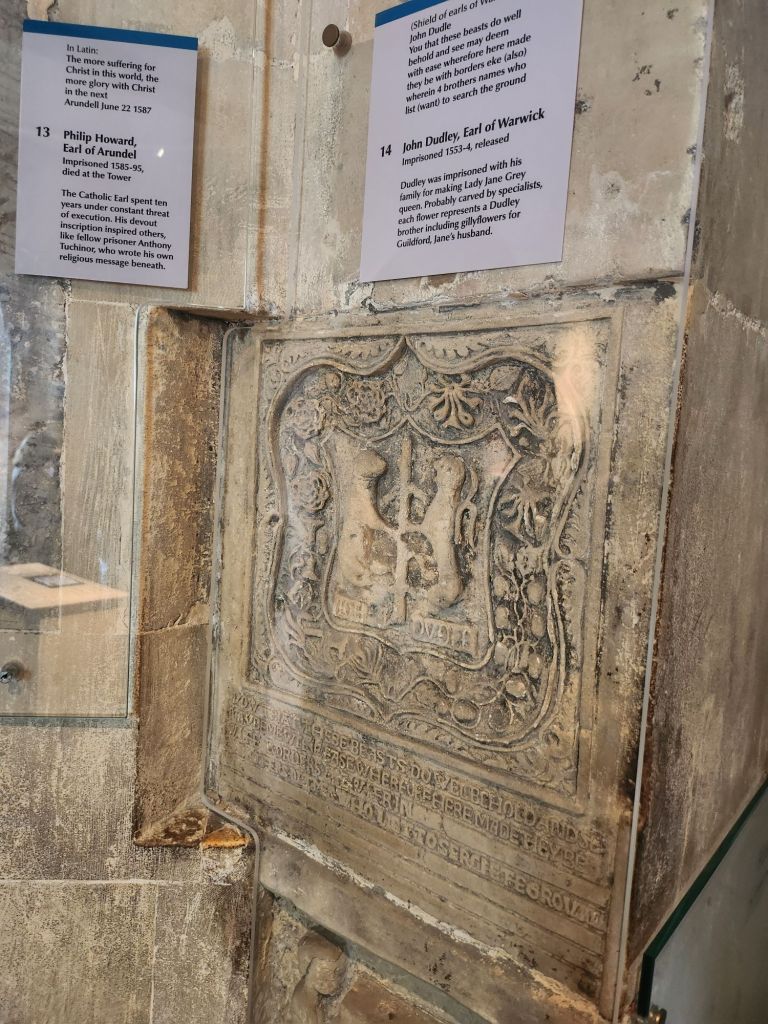
The place names to me evoke fantasy literature – the White Tower, the Bloody Tower, the Cradle Tower, the Bell Tower, the Salt Tower; the Traitor’s Gate, the Jewel House, the Chapel Royal.
Tim and I wandered the whole complex. The biggest crowds were for the royal jewel collection, which didn’t do much for me other than learning that the Roundheads under Cromwell melted down or sold the whole collection in the 1650s; when Charles the Second was restored to the throne he had to start from scratch. So almost all the royal crowns and orbs and other symbols of wealth and power have only been in use since 1661.
Tim and I were surprised and disappointed to find not a single longbow in the extensive weapons displays. The longbow was the most distinct and important English weapon of medieval times. It allowed relatively poor English commoners to hold their own against the French nobility. The Yeoman Guards (Beefeaters, now basically docents) we asked were contrite about the absence and shared out disappointment.
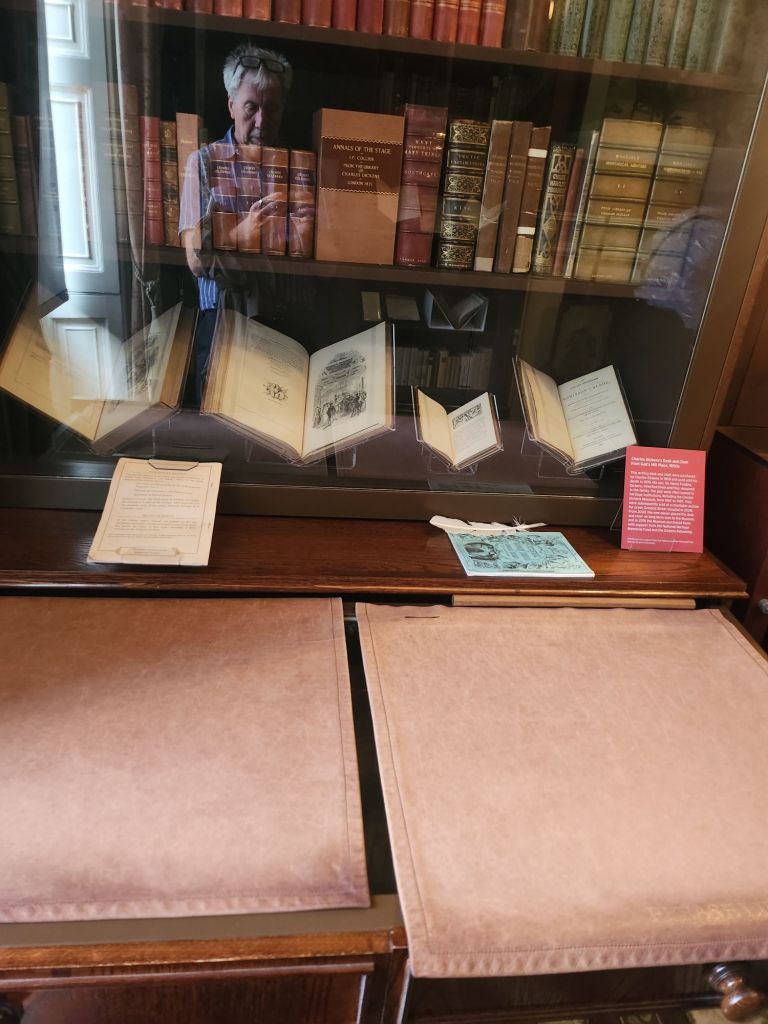
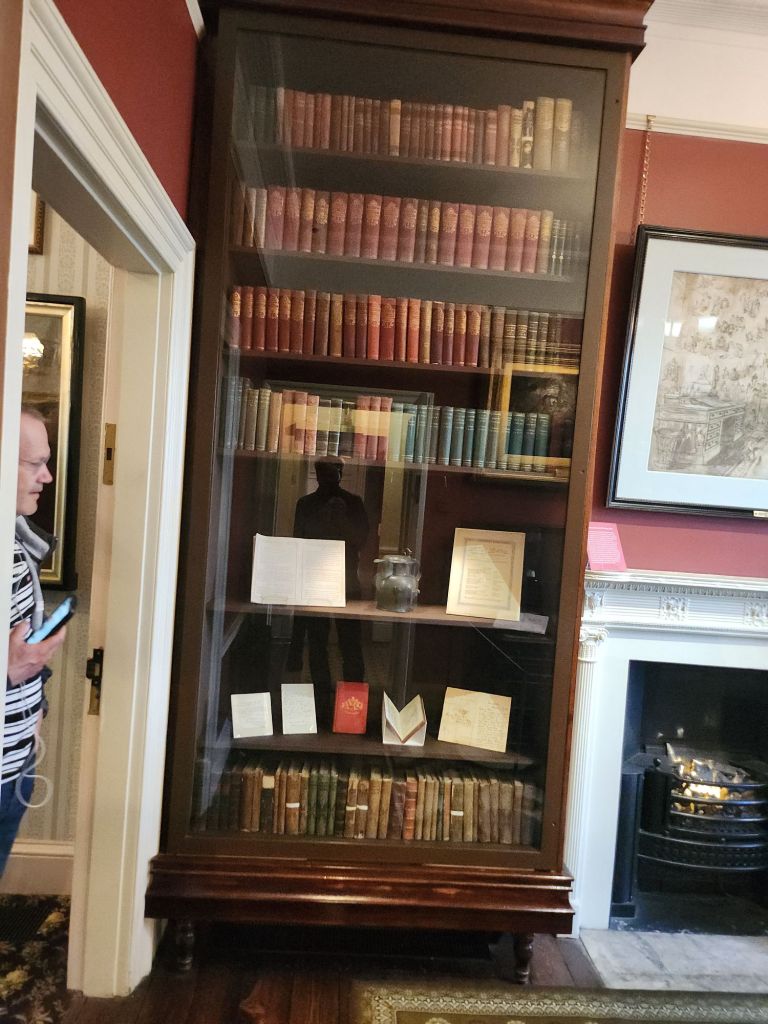
In the afternoon we went to the Dickens Museum, in the Bloomsbury house where Dickens lived and wrote some of his early, lesser novels, including Oliver Twist. These novels made him so rich and famous that he moved to more expensive places. He only lived in this house for a couple years but it’s the only London Dickens residence that survives so they have gathered documents and ugly Victorian furniture and furnishings from every phase of his career. Here are the least ugly pieces of furniture, his writing desk and bookshelf (with bonus ghost images of me).

 helperblog
Leave a reply to Anonymous Cancel reply