Tim and I took a morning train to Portsmouth. Leaving London. I realized we had spent all our time in the eastern part of central London, near the City and St. Paul’s. In my previous stays I have spent my time in more westerly areas, Westminister and the West End. And I’ve never spent much time out of central, tourist London. It seems like it would take a month at least to scratch the surface of all London has to offer.
Portsmouth is both a working port and naval base and the site of several significant historical sites. We spent the afternoon touring HMS Victory, the flagship of Admiral Horatio Nelson at the great 1805 Battle of Trafalgar, in which the British fleet destroyed a larger Spanish and French one and extinguished any possibility of a Napoleonic invasion of Britain.
The Victory has long been on Tim’s bucket list, in part because of his love for the Patrick O’Brian series of novels about the British Navy in the Napoleonic Wars (although the characters miss Trafalgar). He persuaded me to read them too; I found them a very well written account not only of the British Navy but also of the manners, vocabulary and mindset of the early 19th century in almost Austenian precision and detail. Also a great adventure story. I have tried at boring length to persuade others to take them up, unsuccessfully except for browbeating my daughters into reading one book, HMS Surprise, the most accessible. Both were polite about it but showed no interest in picking up another volume.
The Victory is still officially an active ship in the Navy, but it is permanently hoisted out of the water to prevent rot. Although it’s been out of the water for a hundred years they are currently doing a large restoration project to replace a lot of rotted beams and planks, many of them gnawed by the deathwatch beetle. The ship is in a giant shed, with the masts down, so you don’t get any sense of being on the open sea. I avoided hitting my head on low ceilings or falling down steep stairs.
We followed an audio tour describing nelson, the ship, the battle and life in the Navy in general i.e. the fact that sailors consumed 5000 calories a day of (terrible) food and half a pint (four shots) of strong rum. The tour was decent but pretty low tech and probably hadn’t been changed in 30 years. It didn’t really get into what made Nelson so successful, which was the audacity to steer his ships straight at the other fleet, to bisect their line so his ships were firing down the length of the enemy’s, instead of just staying parallel to the enemy and firing from a distance.
The spot where Nelson was shot by a French marksman at the moment of triumph.
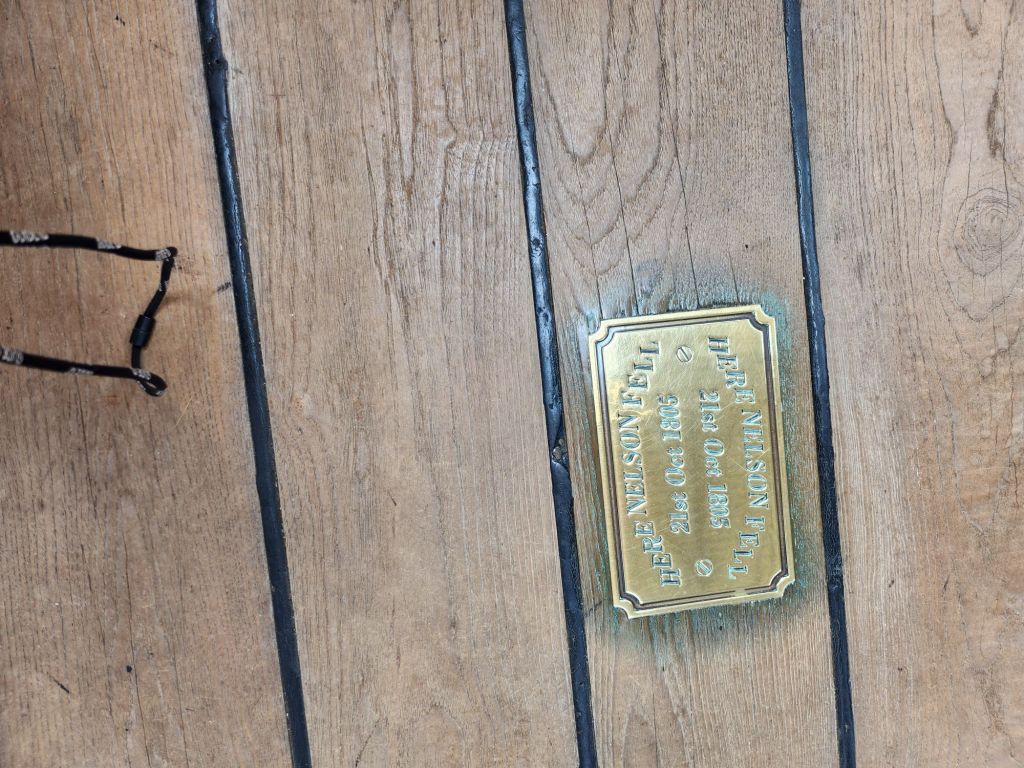
The spot belowdecks where he died a few hours later.

The Victory’s keel, made of pieces of wood supposedly held together by “pintles” and “gudgeons,” which I suspect are words made up by sailors to test the gullibility of landsmen.
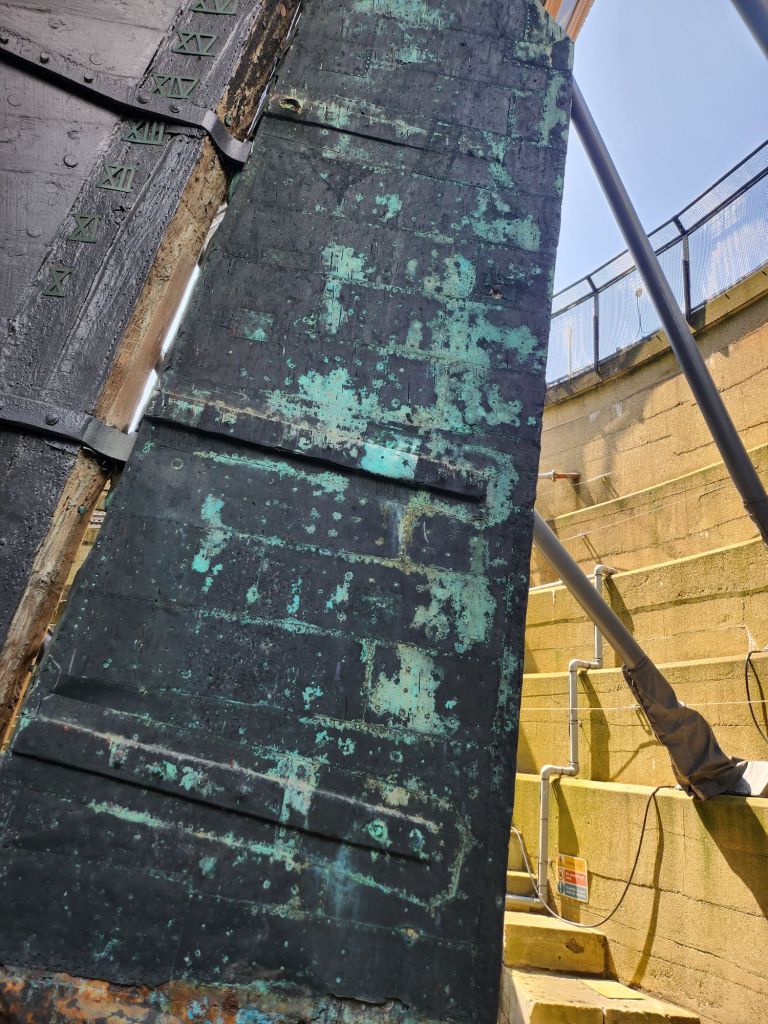
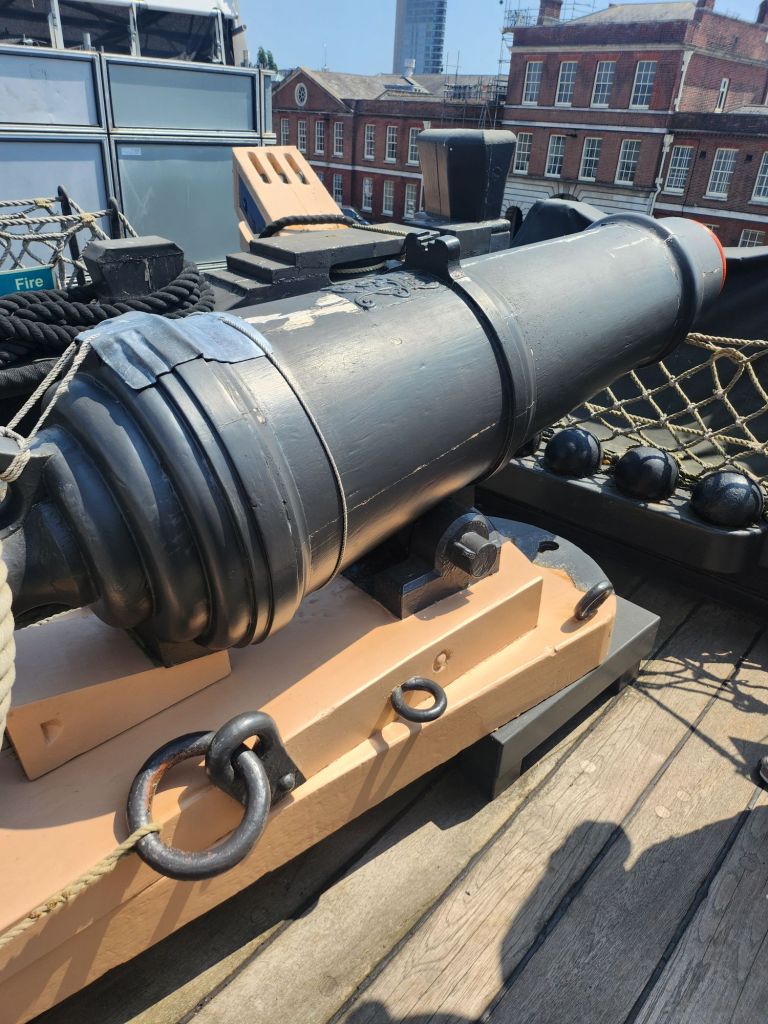
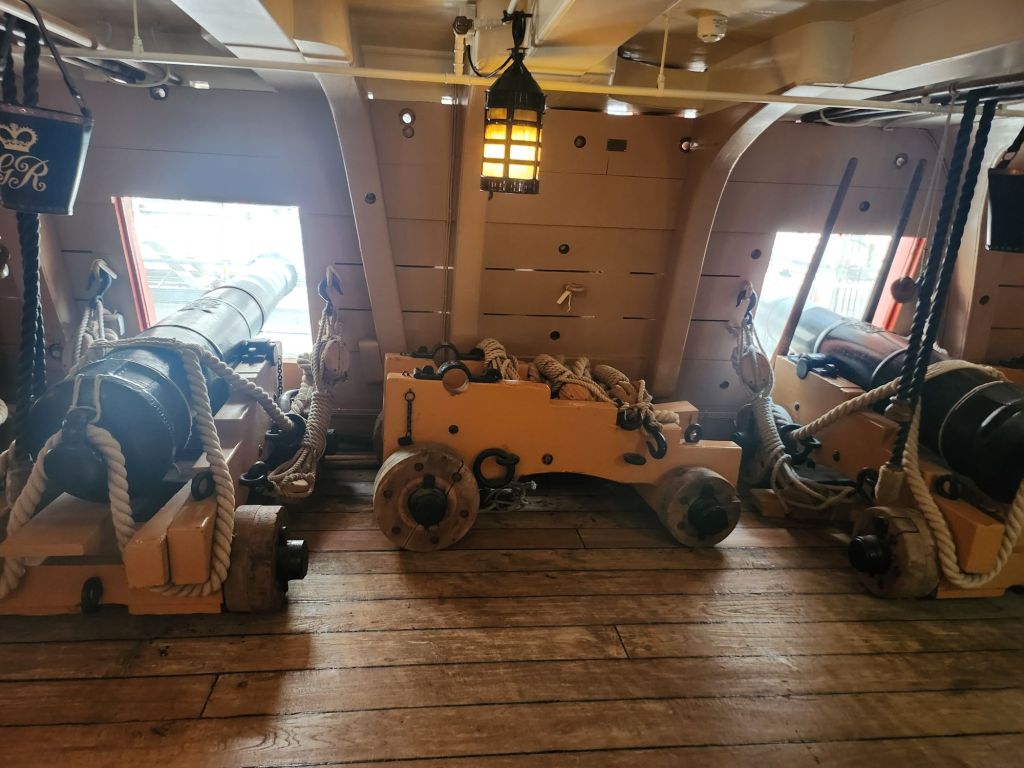
Other photos.
We also took a boat tour around the harbor. The guide pronounced the letter H as “haitch” instead of “aitch” which charmed me every time he said HMS, as he did a hundred times describing ships in the military part of the harbor – “haitch em ess. “


 helperblog
Leave a reply to Thomas Helper Cancel reply