Spent most of the time on D-Day sites. Neither photographs nor words really convey what we saw but photographs are better I think. Here’s the synopsis:
May 24 recovery day in Caen, meeting with group.
May 25 Dday museum, Omaha Beach, American Cemetery
May 26 Paratroopers Museum, St. Mere Eglese, Utah Beach
Our guide for the tour, Julian, is knowledgeable, funny, enthusiastic.
May 25
Omaha Beach Museum. Lots of WWII tanks, trucks, jeeps etc. from all armies. Placards informed about the weight, guns, armor, etc., and — what I liked best — where the vehicle was found — in a garage in Le Mans in 1971, in a junkyard in Bayeux in 1975, being used to haul apples in Normandy in 1960. Learned that the German tanks were much better than the American ones, but German industry only produced about 10,000 over the course of the war as opposed to 50,000 American.

Omaha beach — the bloodiest of the five landing beaches on D-Day — shown at the beginning of Saving Private Ryan. We were there on a cool overcast day somewhat like D-Day itself, with the major difference that the sea was much calmer.
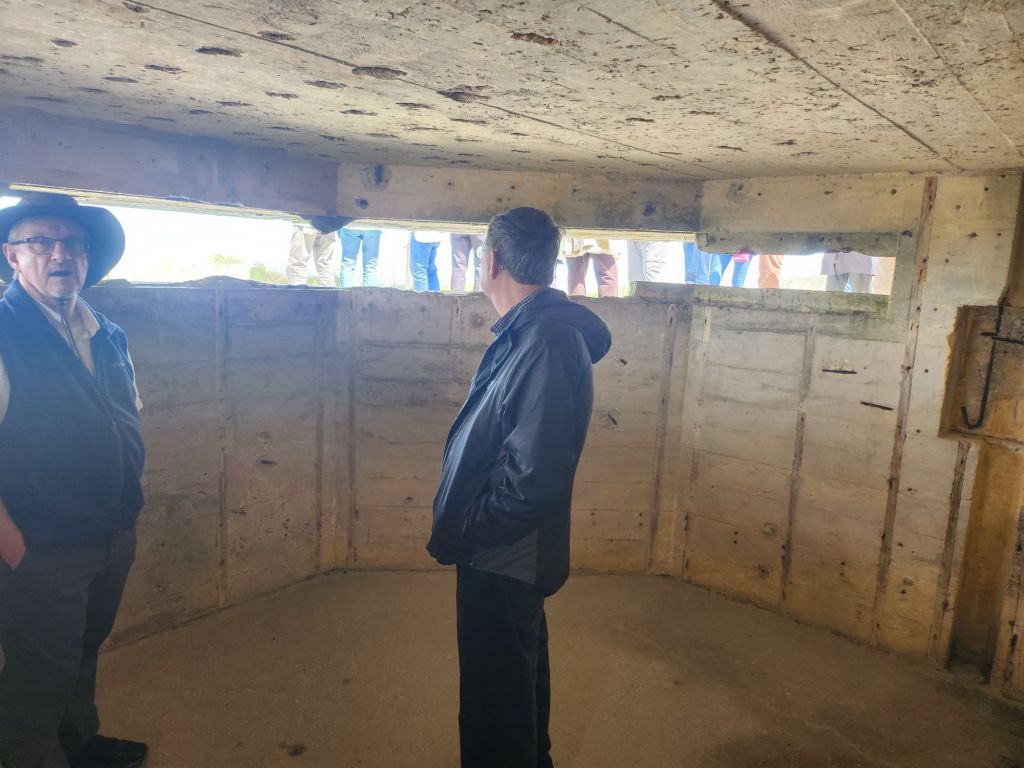
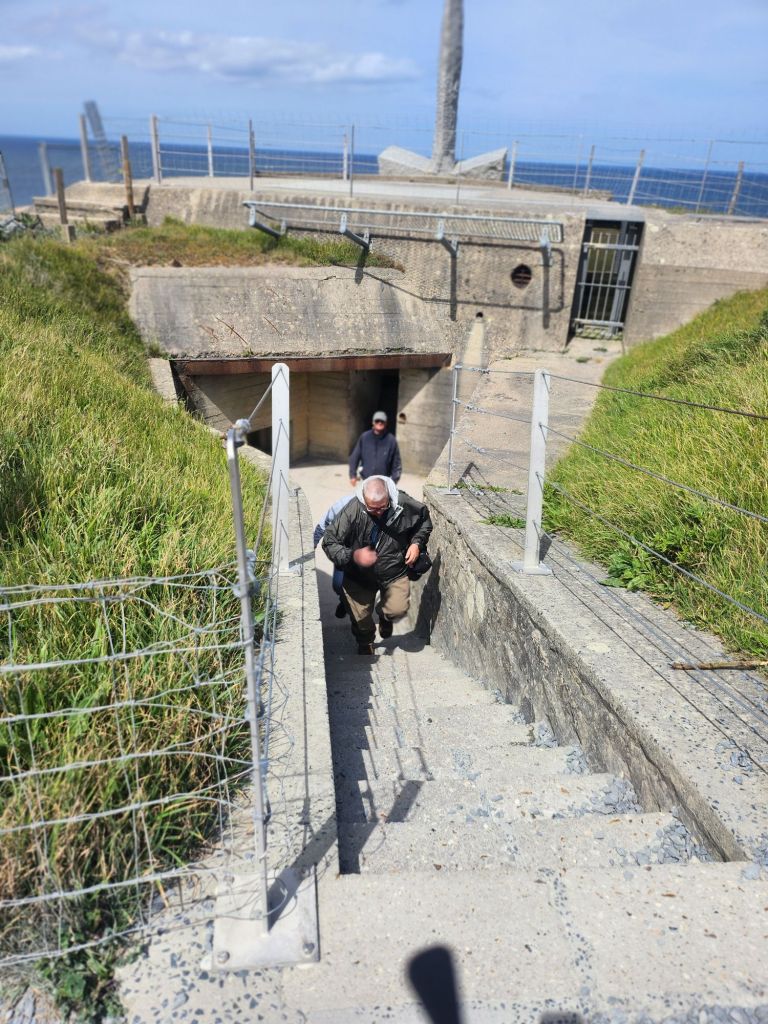
Inside and outside of a German bunker overlooking the beach.
The American cemetery. The sheer number of graves is overwhelming, and there is something powerful about the simplicity and symmetry of the layout.
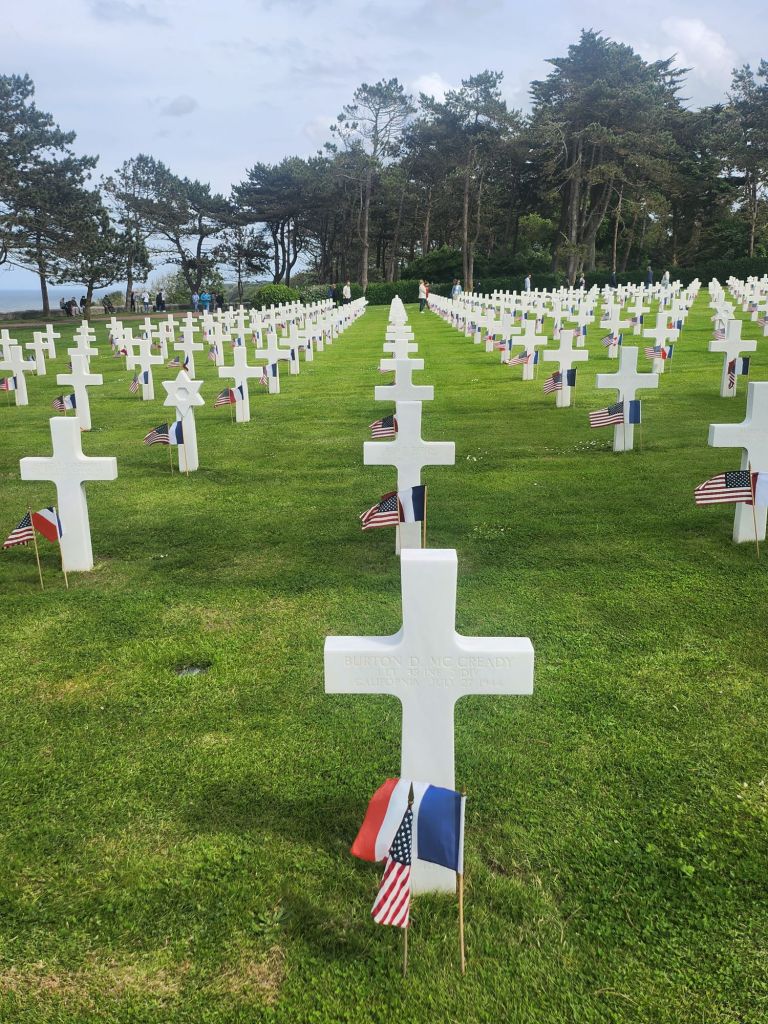
I found the grave of my mother in law’s World War II pen pal, who was killed in actionin July 1944.
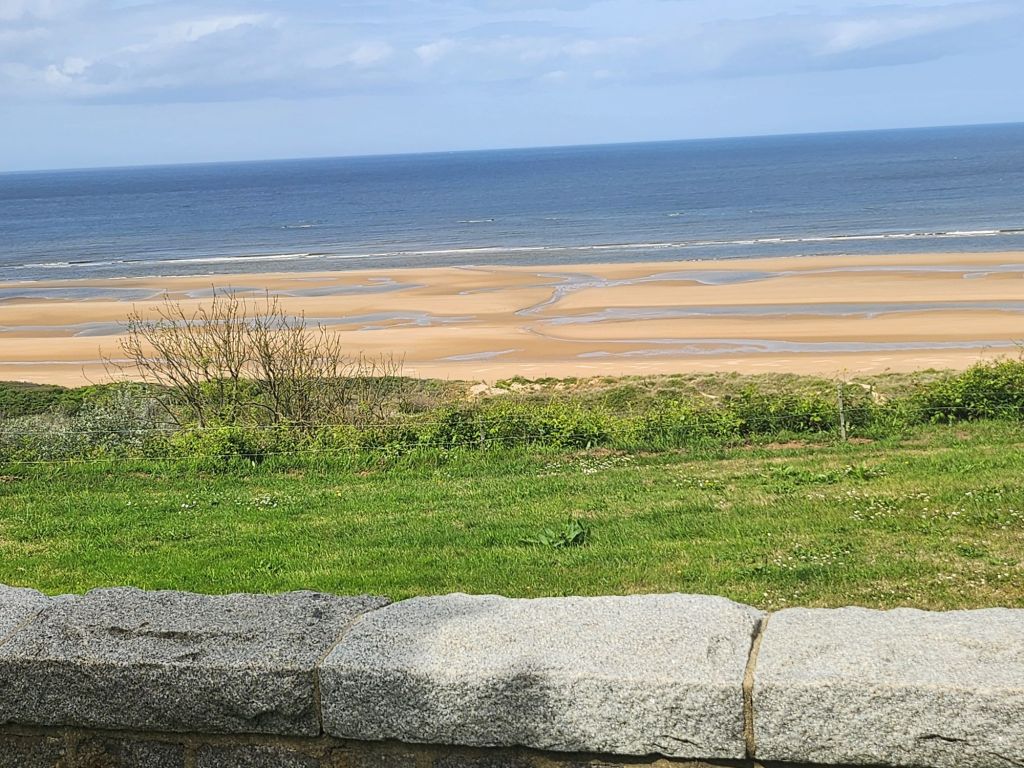
The view of the beach from the American Cemetery on the bluffs overlooking the beach. It’s a miracle anyone could have survived landing on this beach while being shot at from this height.
May 26
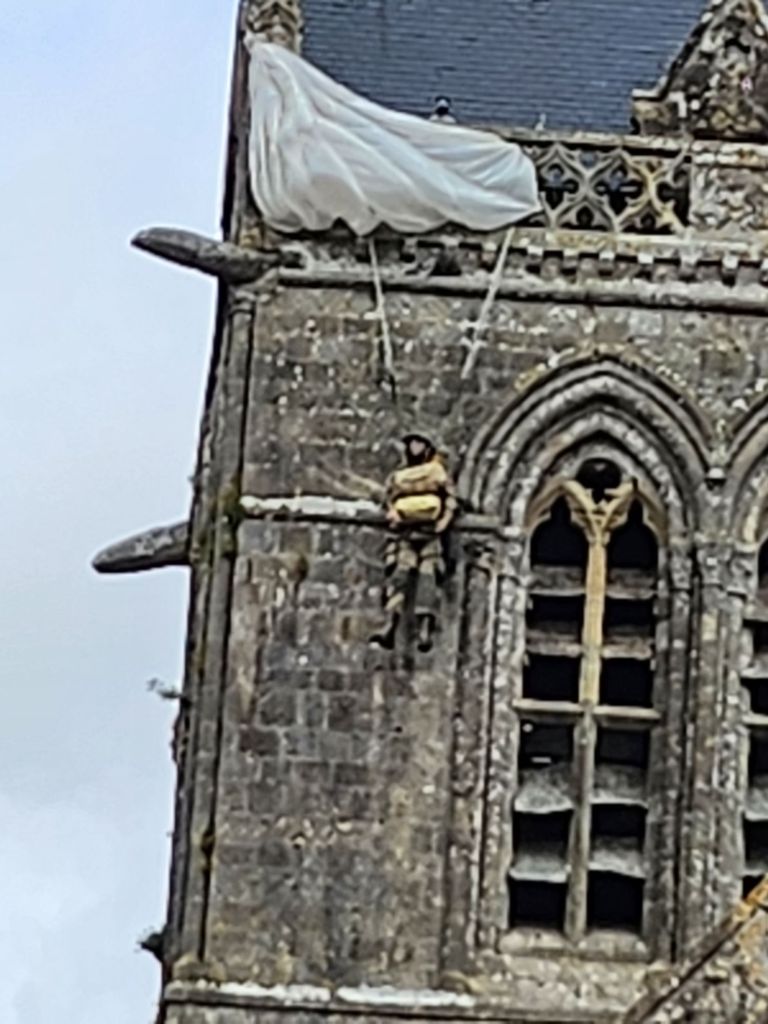
Spent much of the day seeing sites related to the paratroopers who were dropped behind German lines the night before D-day to take bridges and sow confusion. The village of St.-Mere-Eglise has kept a memorial to a paratrooper whose chute got caught on the steeple. He played dead for two hours, then was captured but got away a few hours later in the chaos.

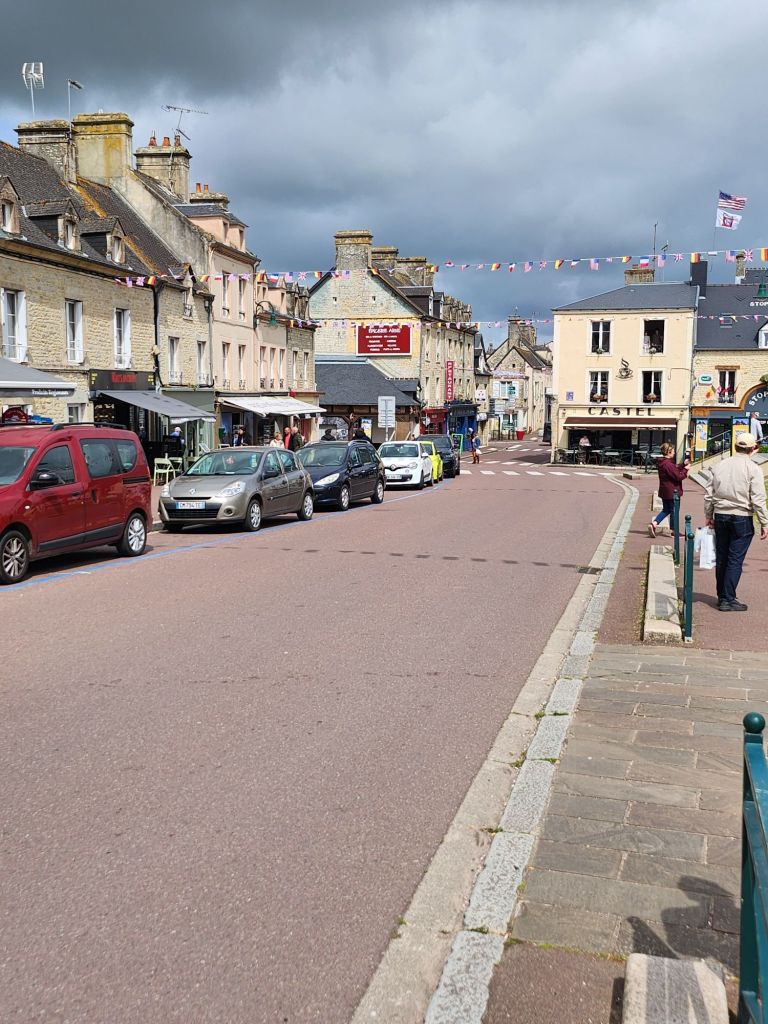
The St. Mere-Eglese main street where we had lunch.
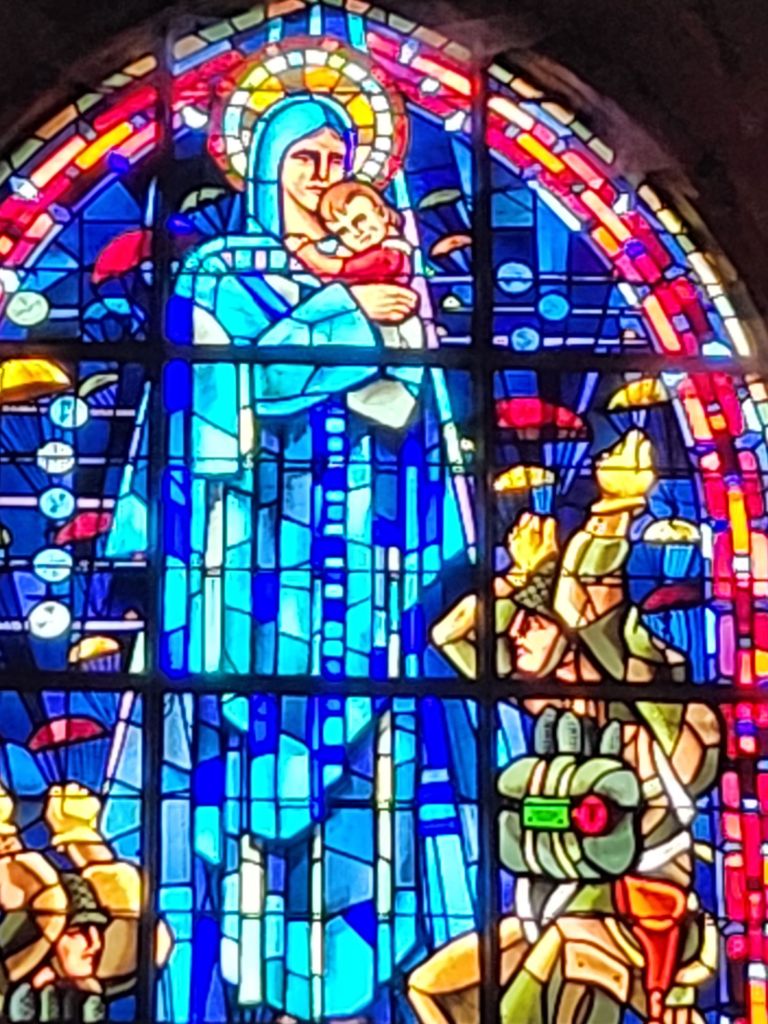
The stained glass window in the church at Ste. Marie du Mond, with Mary blessing the paratroopers.
A replica of one of the D-Day landing craft. I had assumed they were made of steel or some other bullet proof material but they were in fact made of plywood.

No photos from the German cemetery. Any sense of historical interest was overwhelmed by moral revulsion. I and several others did a quick walk around the perimeter and then sat on the bus while others did a slightly longer tour.


 helperblog
Leave a reply to Laysan Cancel reply