The last three days we have divided our time between the middle ages and 1944. Apparently not much happened between those periods other than a few references to the French Revolution or Napoleon. Rather than going day by day I will have one post on each topic.
William the Bastard, known as William the Conqueror after 1066, was Duke of Normandy starting at age ten (in 1038) after his father died. Although William was illegitimate he was his father’s only son, so he got the job. He spent the first ten years of his reign dodging assassination and kidnapping attempts, which apparently toughened him. After age 20 or so he turned to seeking revenge on those who were against him, which he did by promising to redistribute their lands to his followers. Supposedly one reason he invaded England was because he ran out of land in Normandy to keep his promises.
He and his wife Matilda built a lot of castles and churches in Normandy, particularly here in his headquarters of Caen. First we visited the Chateau in Caen, a third of a mile from our hotel, which was imposing on the outside but park-like on the inside.
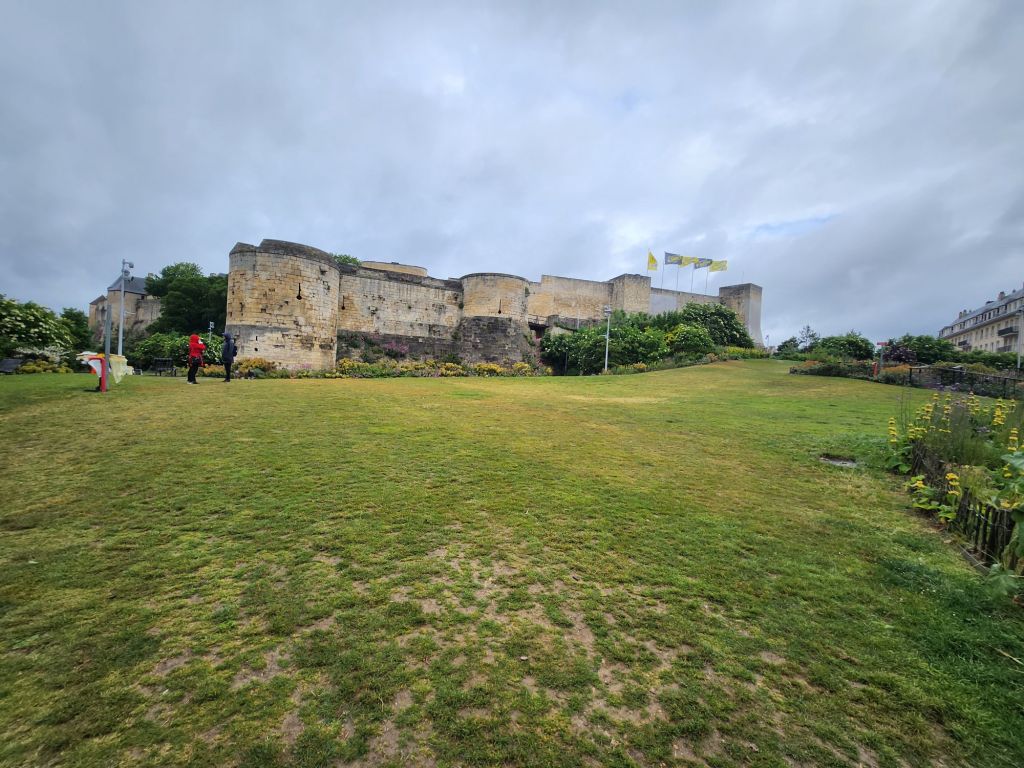
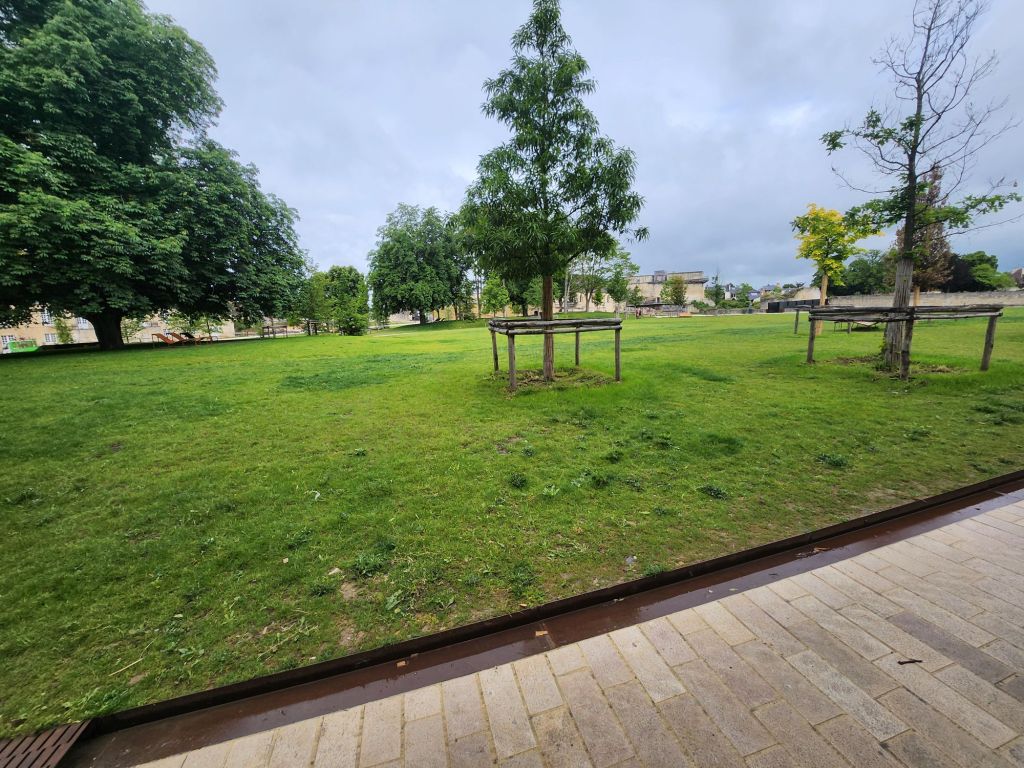
The ditch (not a moat because it never held water).
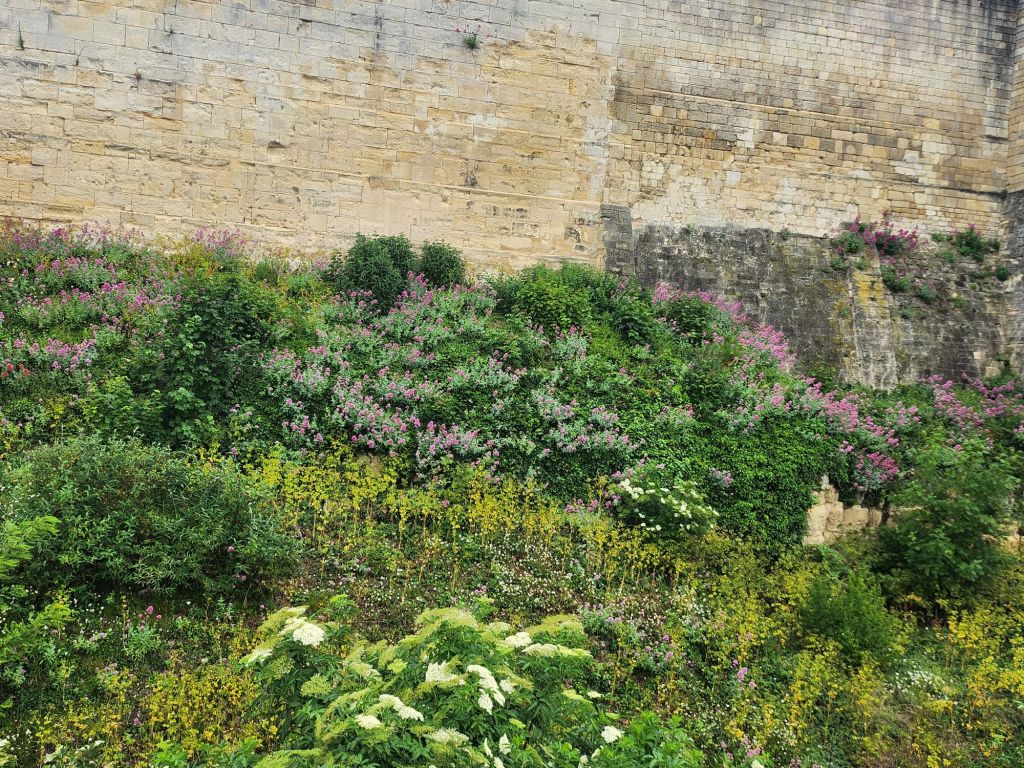

The nunnery built by Matilda.

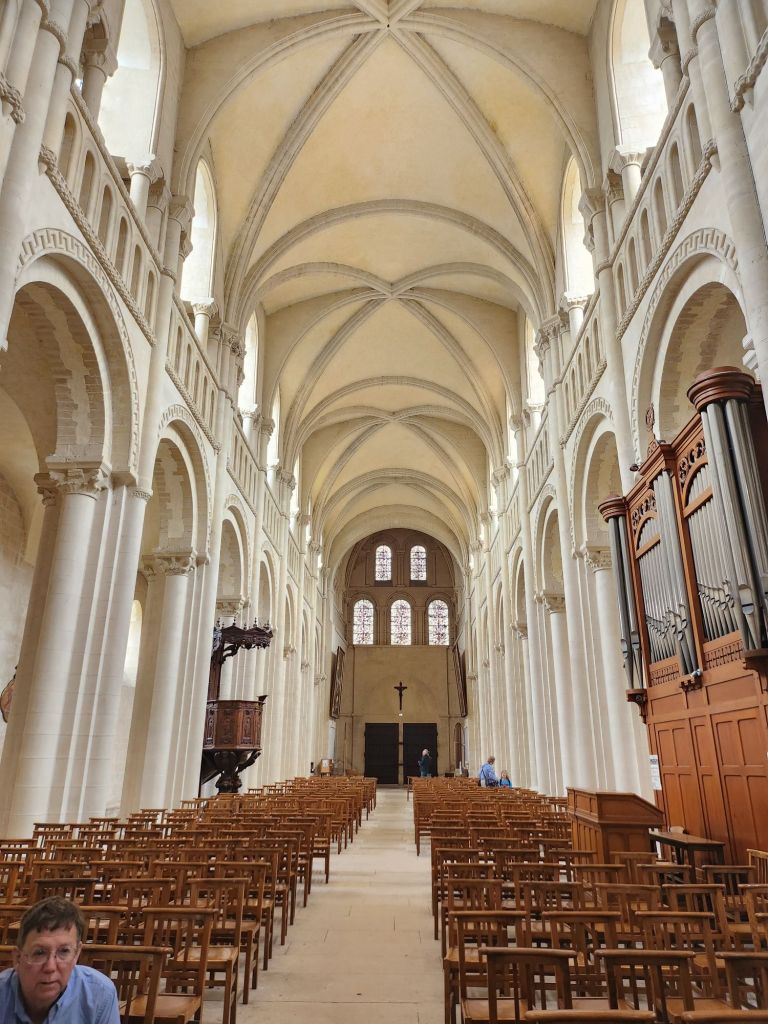
The monastery that William built, and in which he was buried. Someone in our group said that in contrast to Matilda’s church his was a good example of manspreading. Our guide Julian is in the first two pictures.

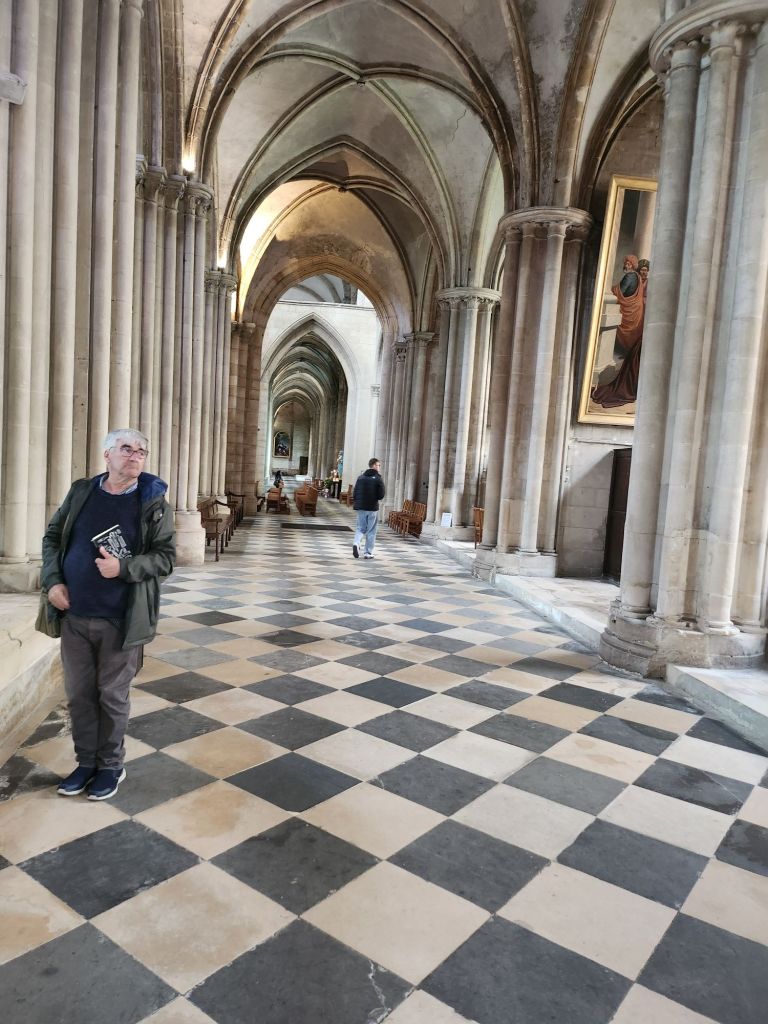
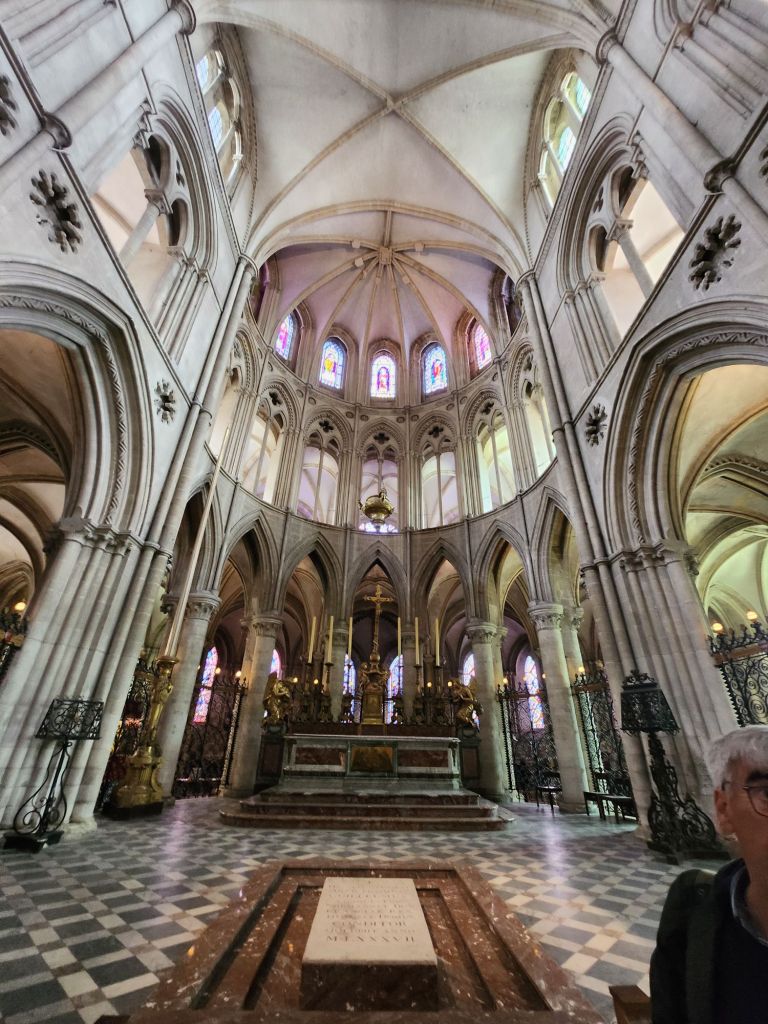
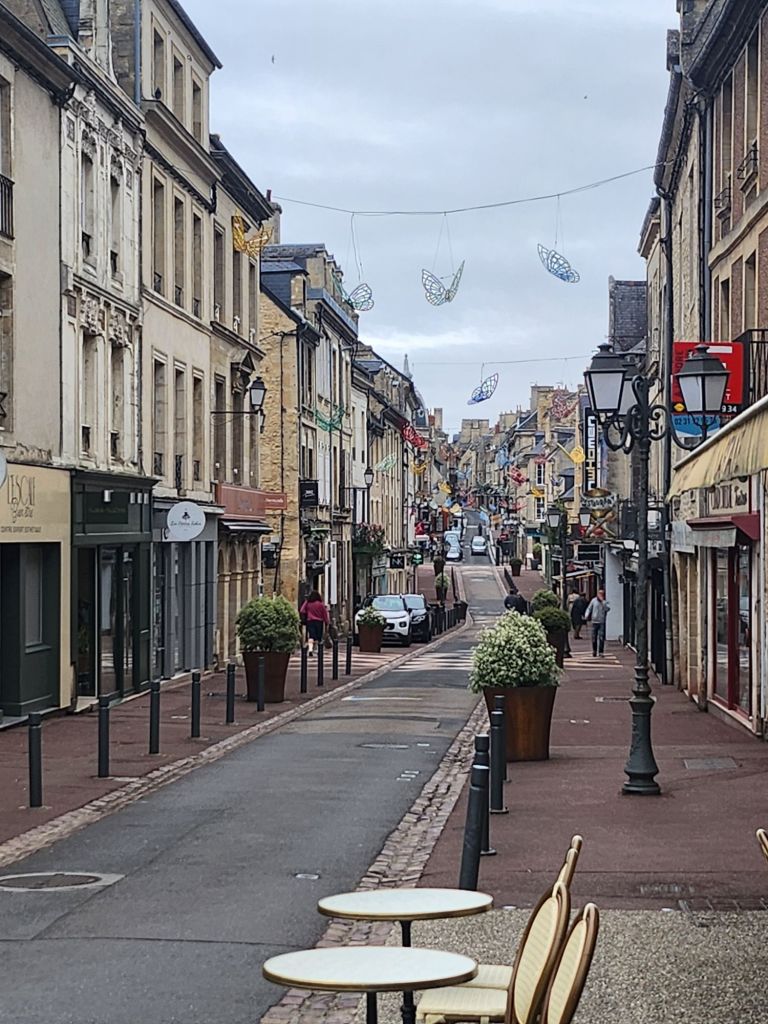
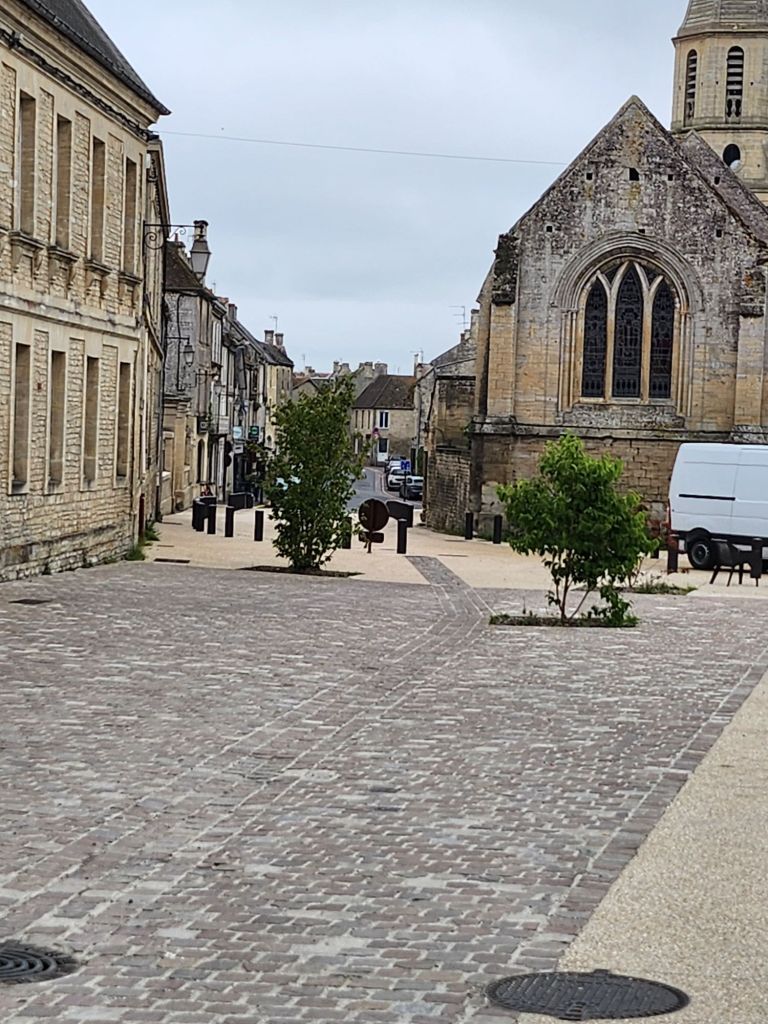
We visited Bayeux. Unlike most other towns in Normandy, Bayeux was untouched by WWII. The central area is pretty large and is filled with narrow streets and medieval buildings, many of them remodeled or rebuilt in the following centuries so that the facades are only three or four hundred years old as opposed to six or nine hundred.
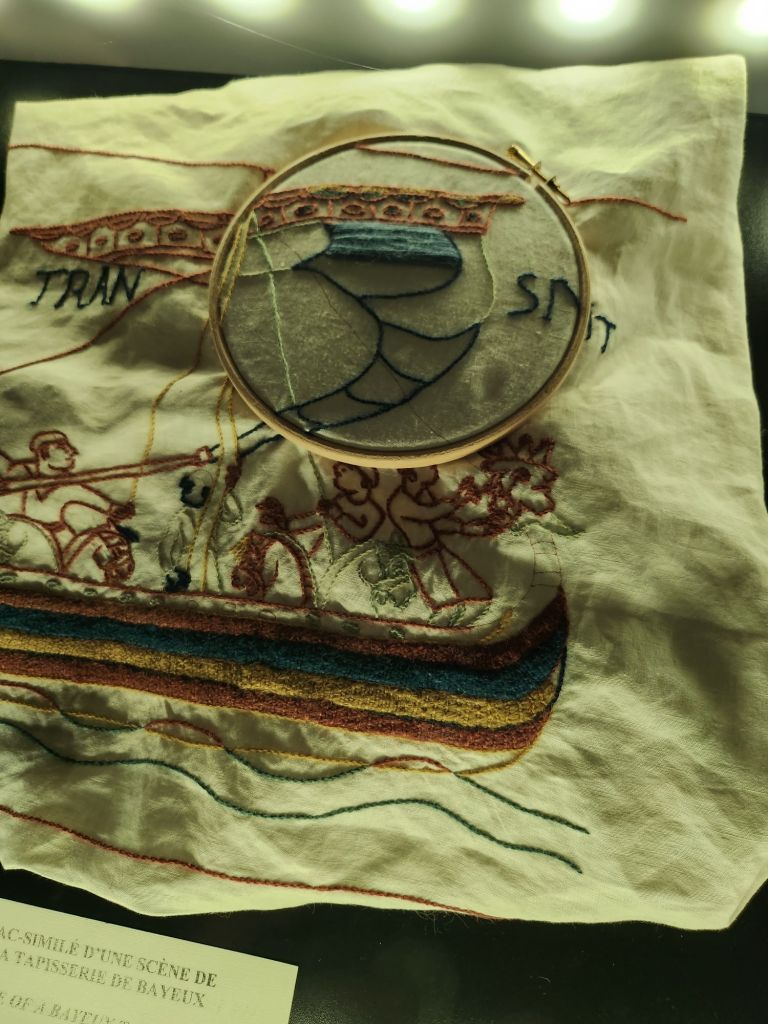
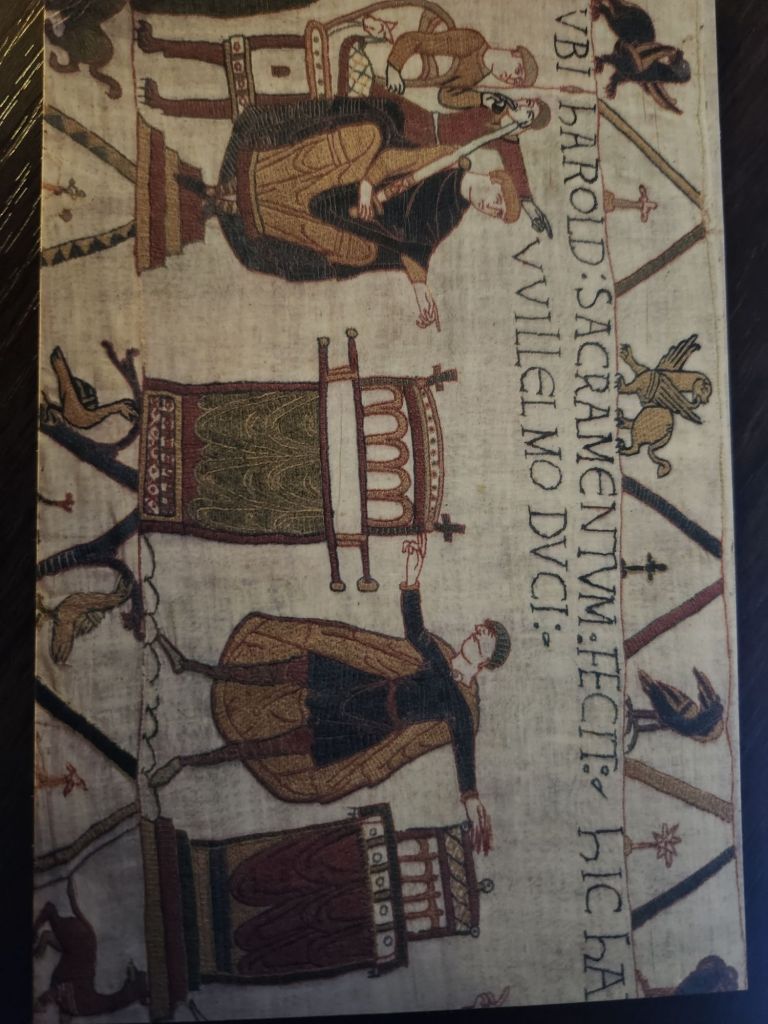
I had always assumed that the Bayeux Tapestry was a series of wall hangings depicting the Norman Conquest. It is about the Conquest, but it’s a continuous scroll about 20 inches high, 224 feet long. Julian said it is actually embroidered, not woven, and was done in Canterbury, so it should be called the Canterbury Embroidery. A closeup of a reproduction of the embroidery.

The Tapestry shows 58 scenes of the diplomatic and military lead up to the invasion. The central propaganda claim is that the childless king of England, Edward the Confessor, promised the throne to William and that a rival claimant, Harold, first acknowledged William’s right and then seized the crown for himself. So basically William had to invade. The Tapestry shows scenes as important as Harold swearing allegiance to William (on two boxes of relics because William didn’t trust him)
or has routine as soldiers cooking stew

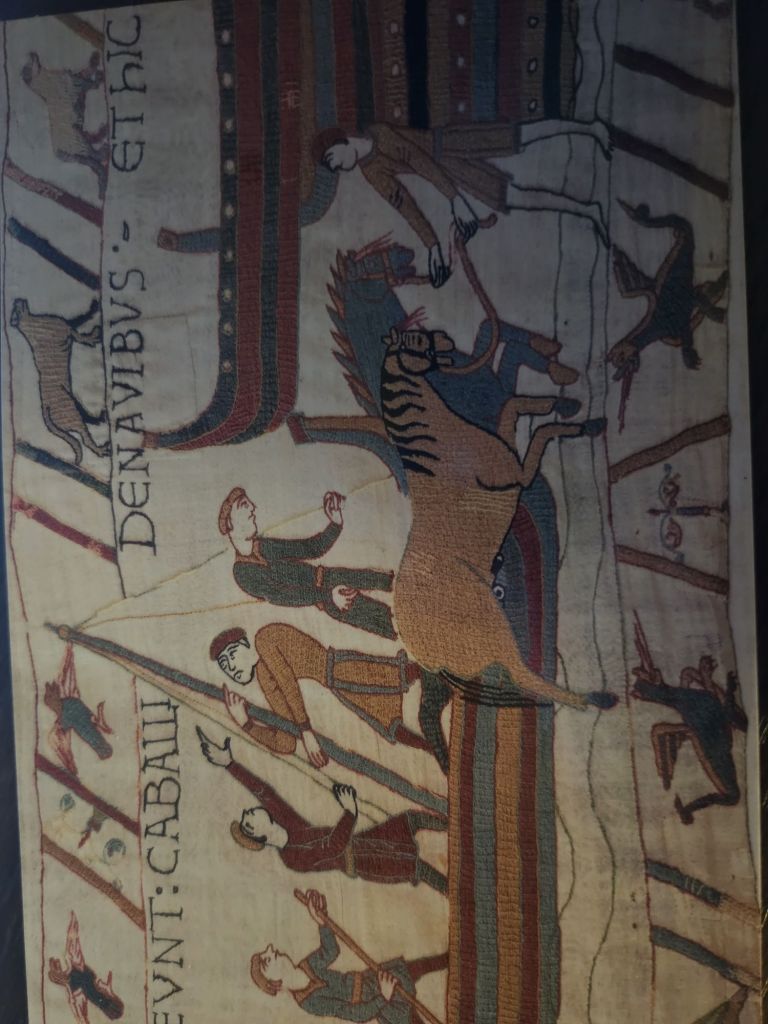
Also lots of horses – getting on and off ships, charging, fleeing, delivering messages.
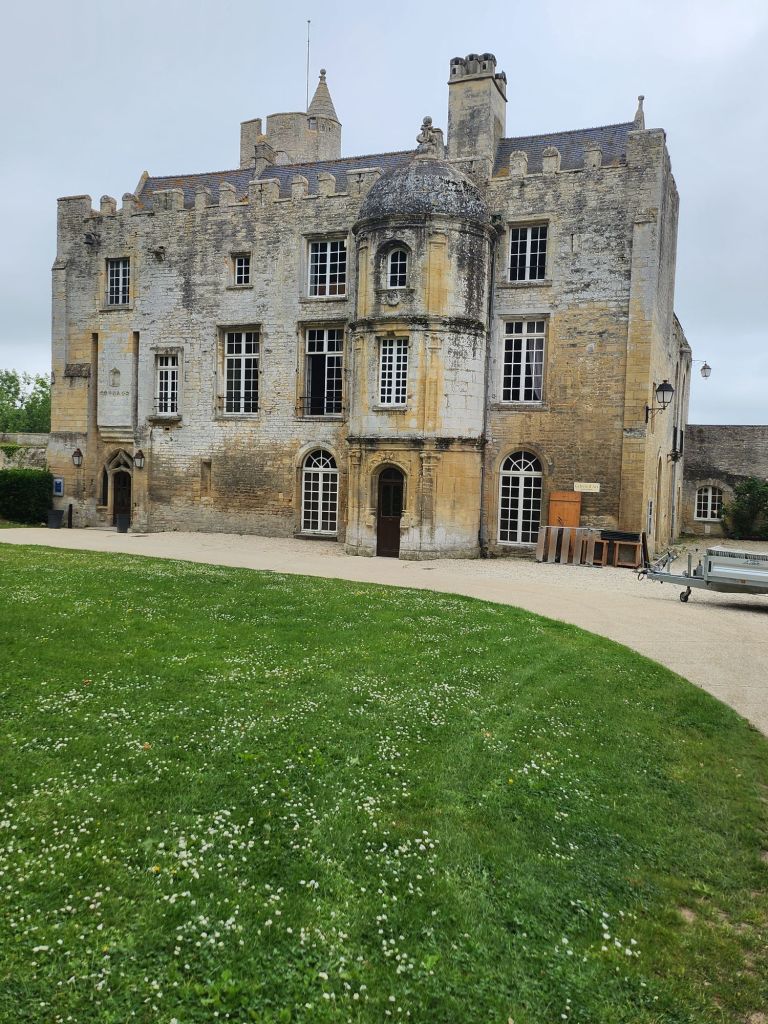
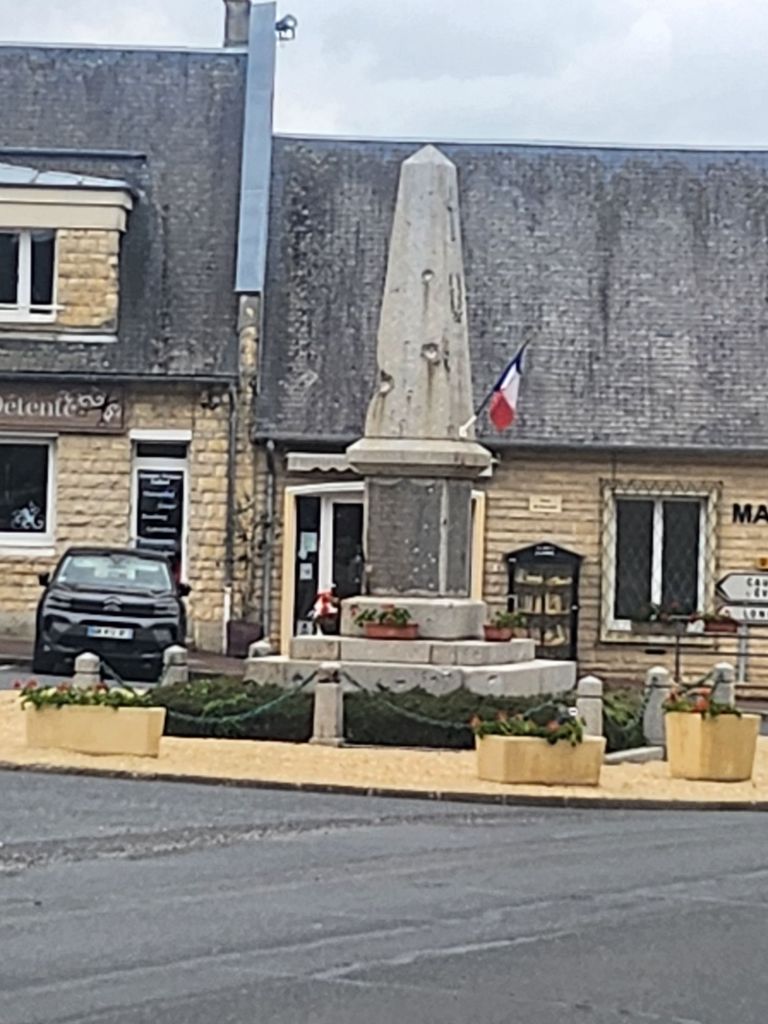
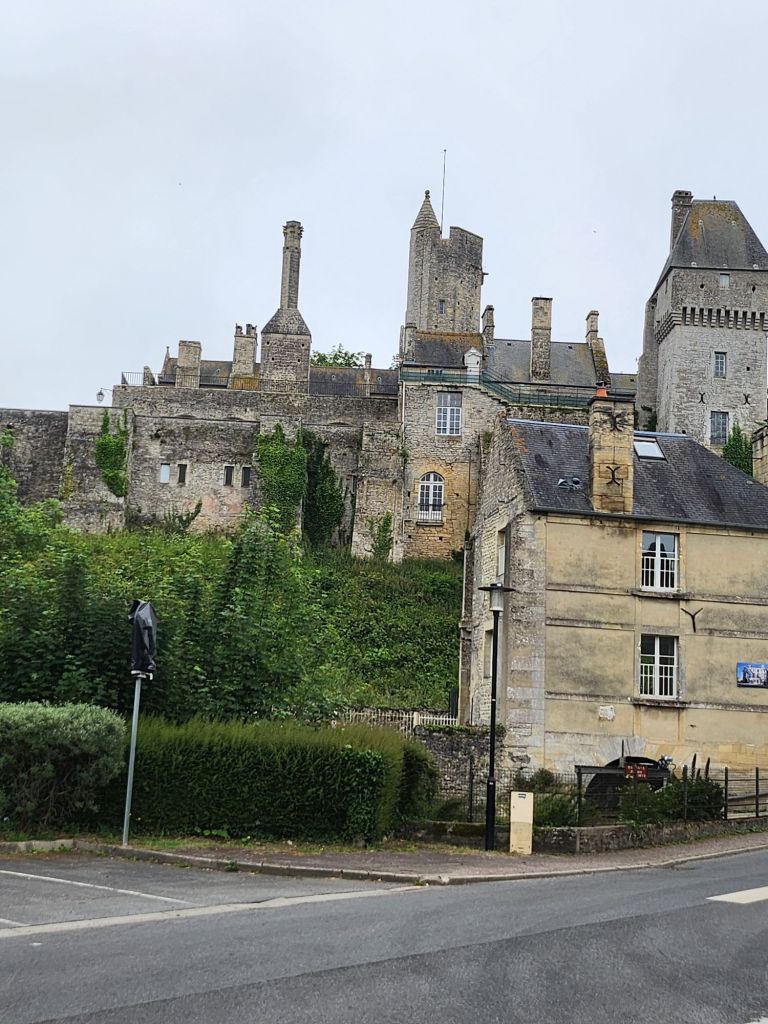
Also some beautiful medieval places that I don’t have any descriptions for:

 helperblog
Leave a reply to Anonymous Cancel reply