Dubrovnik tourism puts Hawaii to shame. One thousand residents, two million tourists, four thousand vacation rentals. It deserves all the attention.
History first. Dubrovnik is similar to Venice: Adriatic port that flourished most around 1200-1500, with an economy built on shipbuilding and trade rather than land and feudalism. Both places had a weird, quasi-democratic government, with a large group of male nobles (in Dubrovnik more than half of the male population) voting on affairs of state. In Dubrovnik, there was a Rector who was nominally the head of state, but the term of office was only 30 days.
The Rector’s Palace.
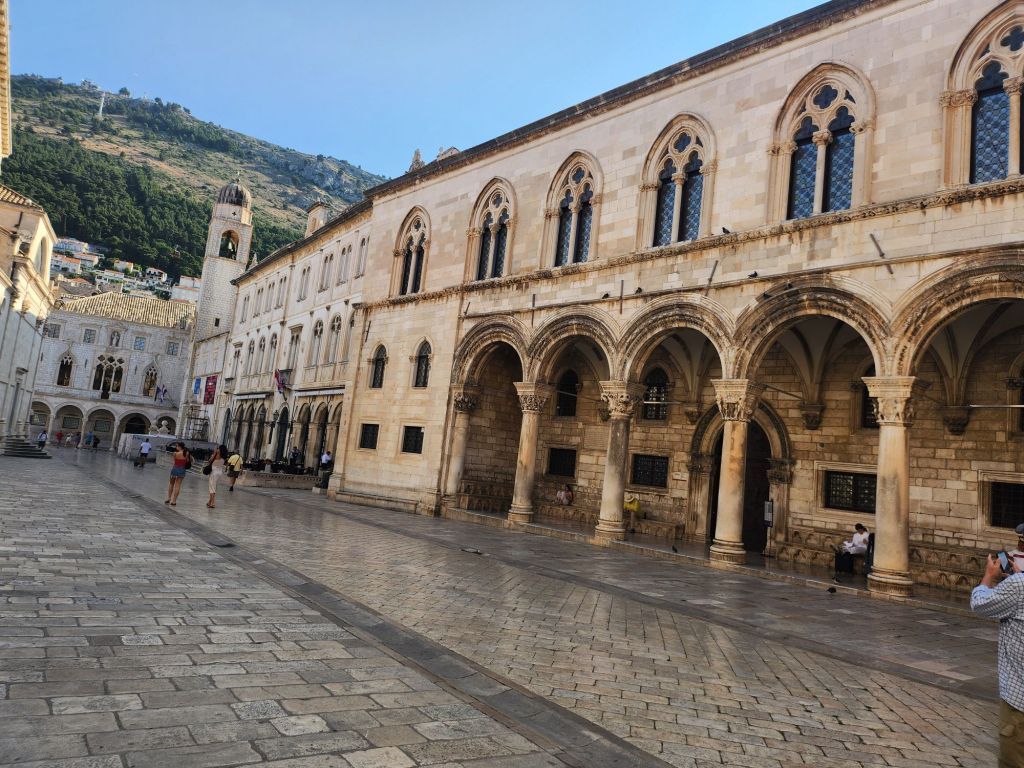
The doorway to the Council meeting room. The words above the door translate to “forget your private business, concern yourself with public affairs.”

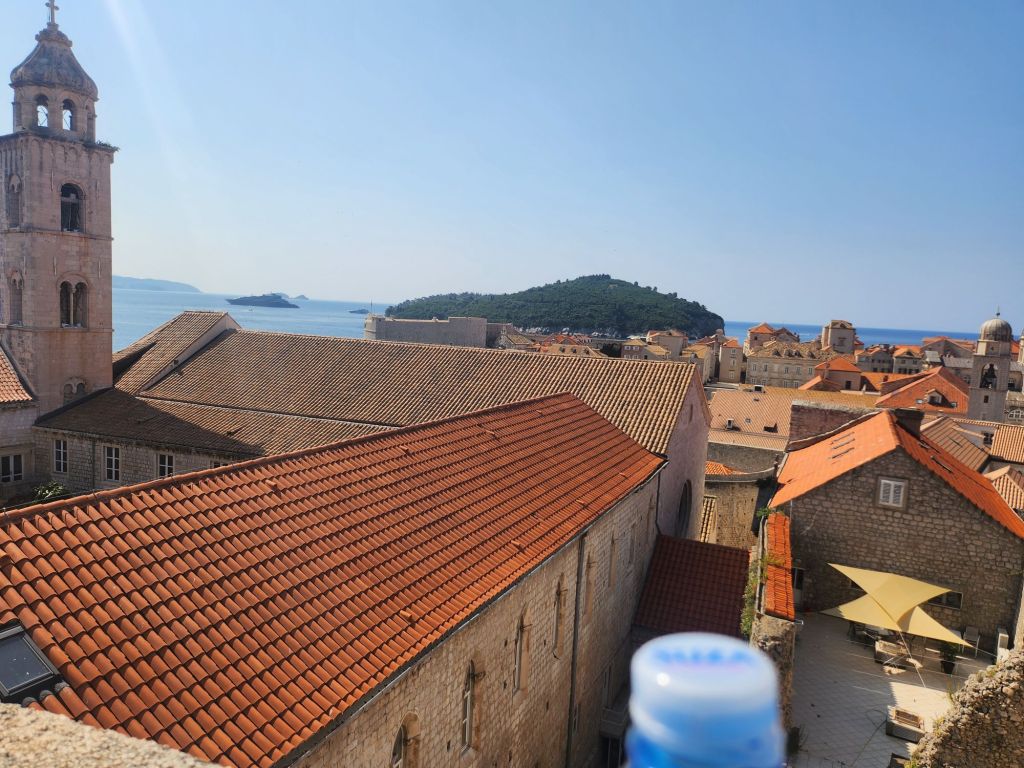
Another similarity to Venice is the many churches, palaces and paintings, although according to our guide the civic instinct was to be less ostentatious than Venice because they didn’t want people to know how rich they were.
The city was bombed and besieged by the Serbs in the 1990s but not conquered. They’ve kept some damage as scars of honor, but have otherwise restored the place to pristine condition.
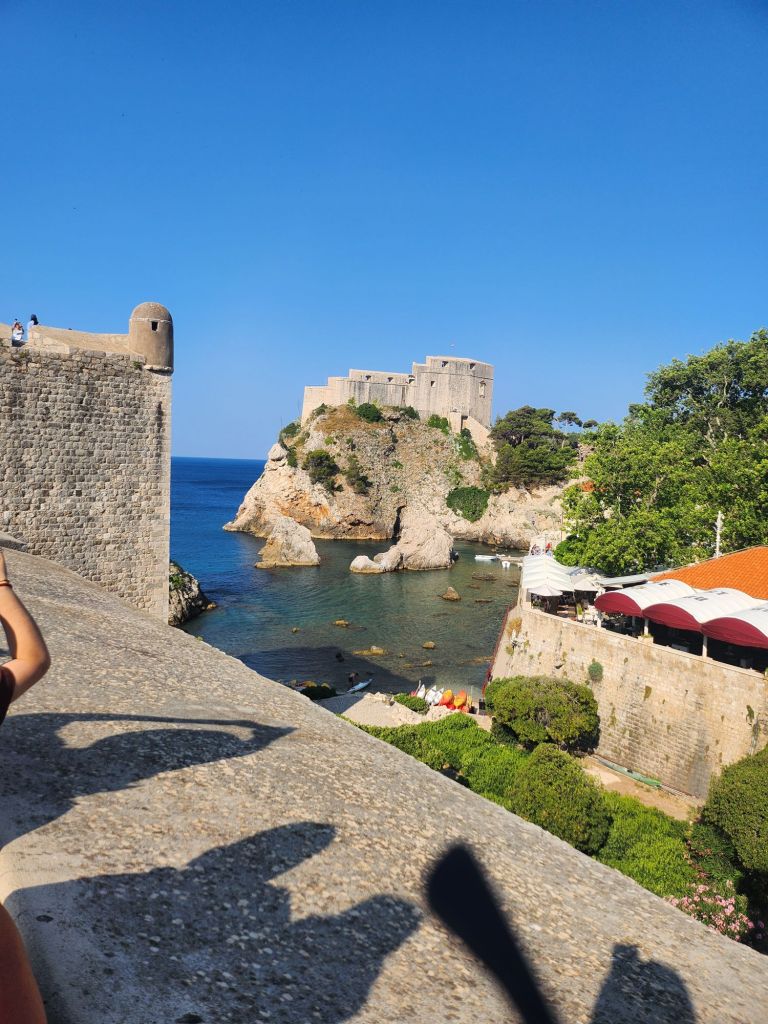
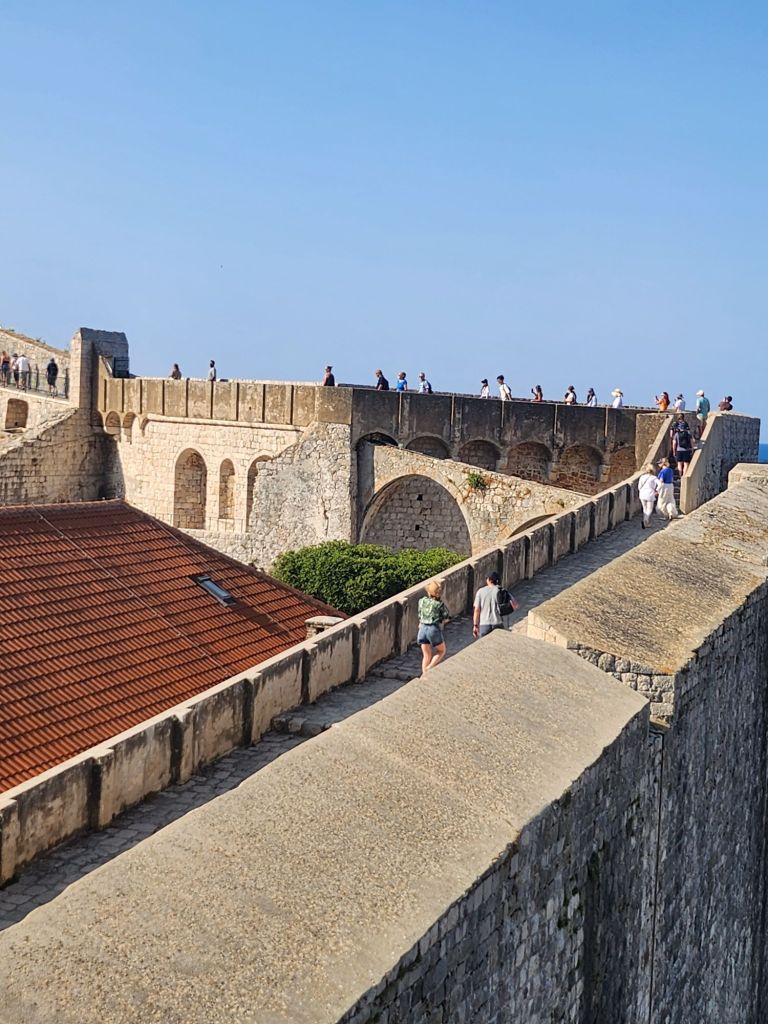
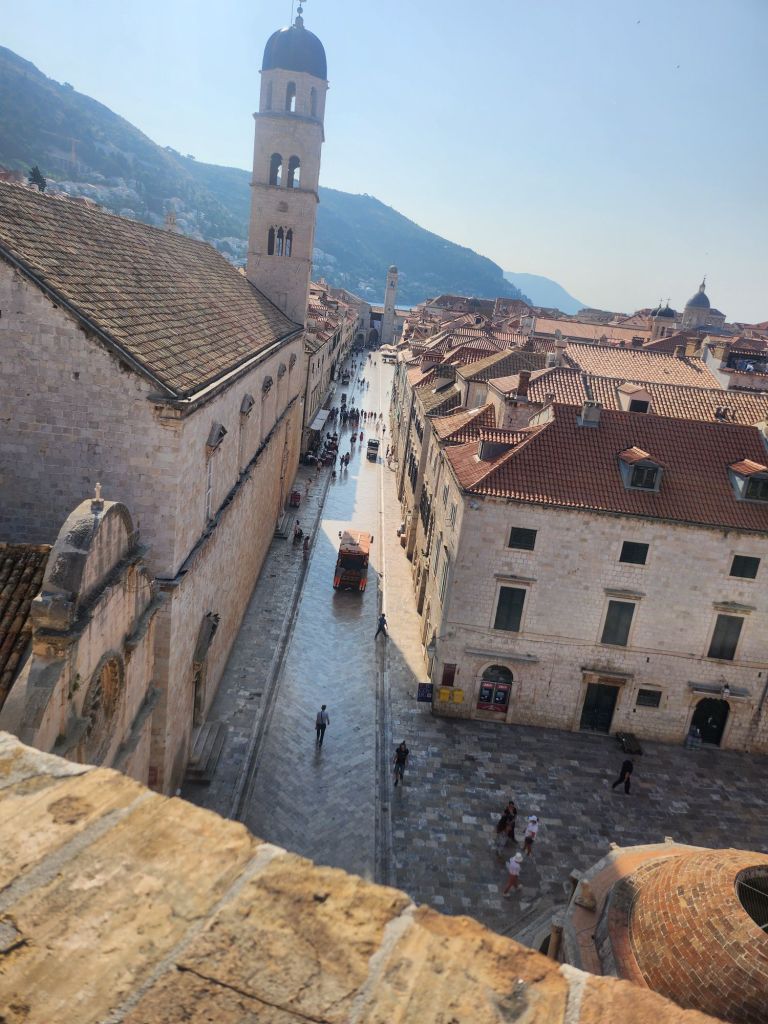
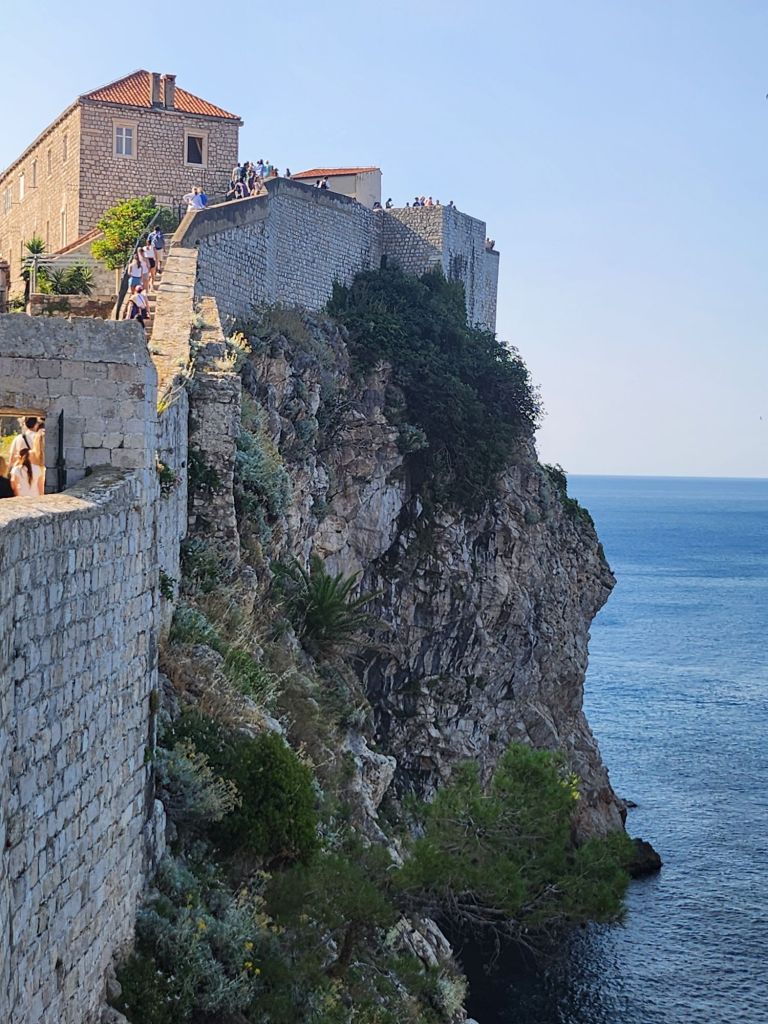
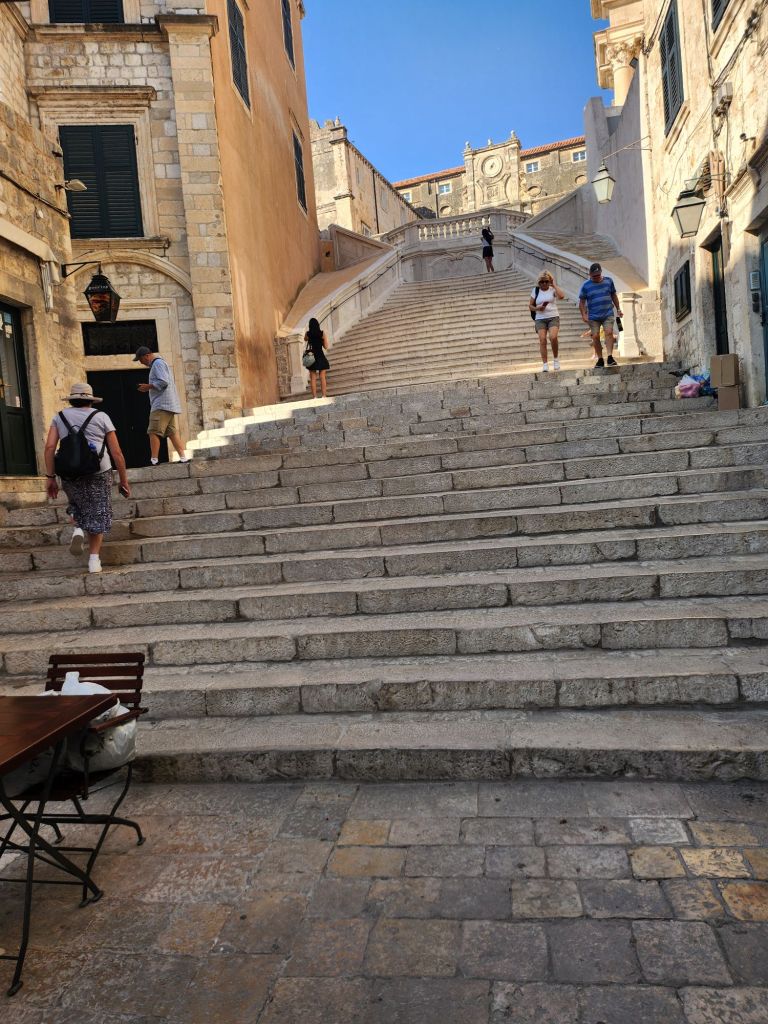
It’s yet another fortress and walled city but on an enormous scale. They used many sites for Game of Thrones locations.

Also went to the Red Museum, about life under socialism between 1945 and 1991. Yugoslavia, led by the Communist Marshal Tito, basically liberated itself from the Nazis, and he ruled until he died in 1980. There was repression of dissent, jailing and torture of political prisoners, but not on a Soviet scale. Travel to the west was ok, and the economy developed pretty well for the first 15 years after the war. But development slowed and tensions rose among the various nationalities, looming Yugoslavia.
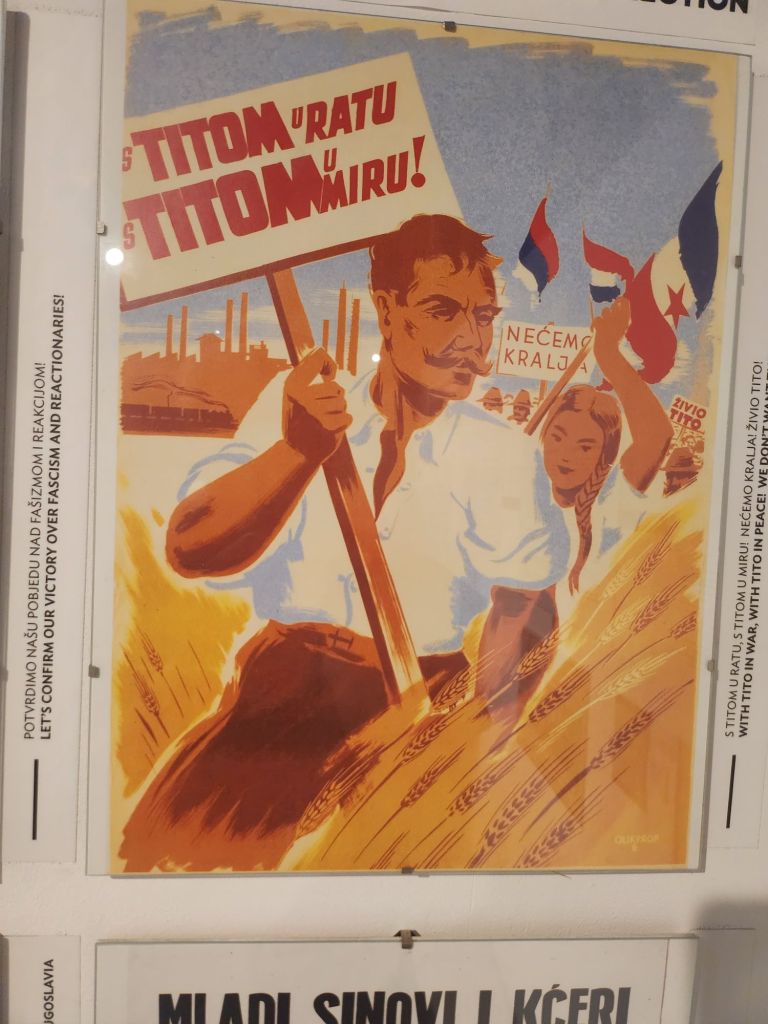
A poster for the one free election after the war, translated as “Tito for us in war, Tito for us in peace,” and “We don’t need the king” and “Long live Tito.” Tito won the election over a royalist party and never had another free election.
The museums did a good job of reproducing life for ordinary citizens – seemed similar to US life except 20 years late – electric typewriters and black and white TVs in the eighties.
They also had a movie poster for “Ben Hur,” which puzzled me until I read the placard saying that the Yugoslavian version cut all the religious scenes. Makes you wonder how it ends.


 helperblog
Leave a reply to Anonymous Cancel reply